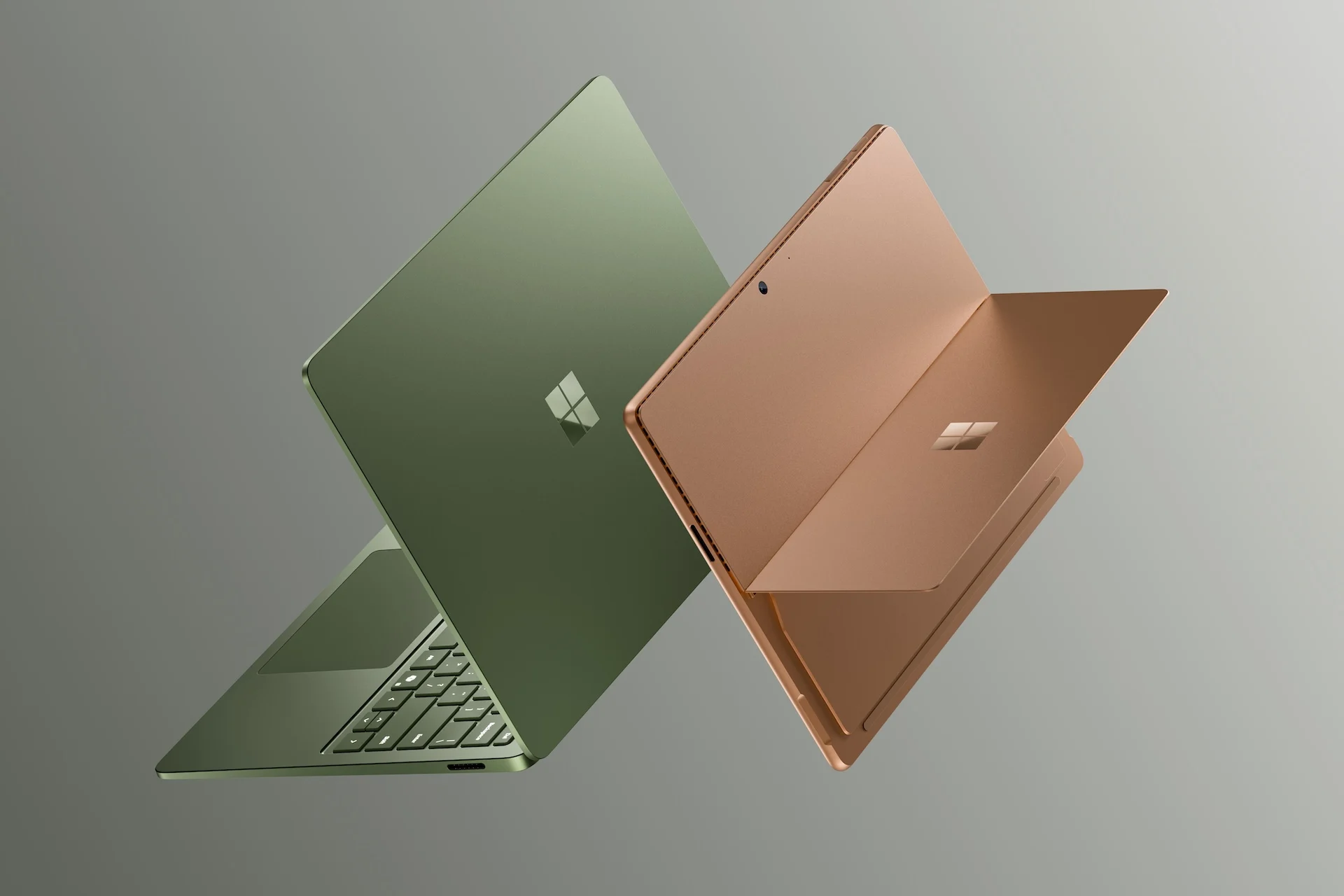
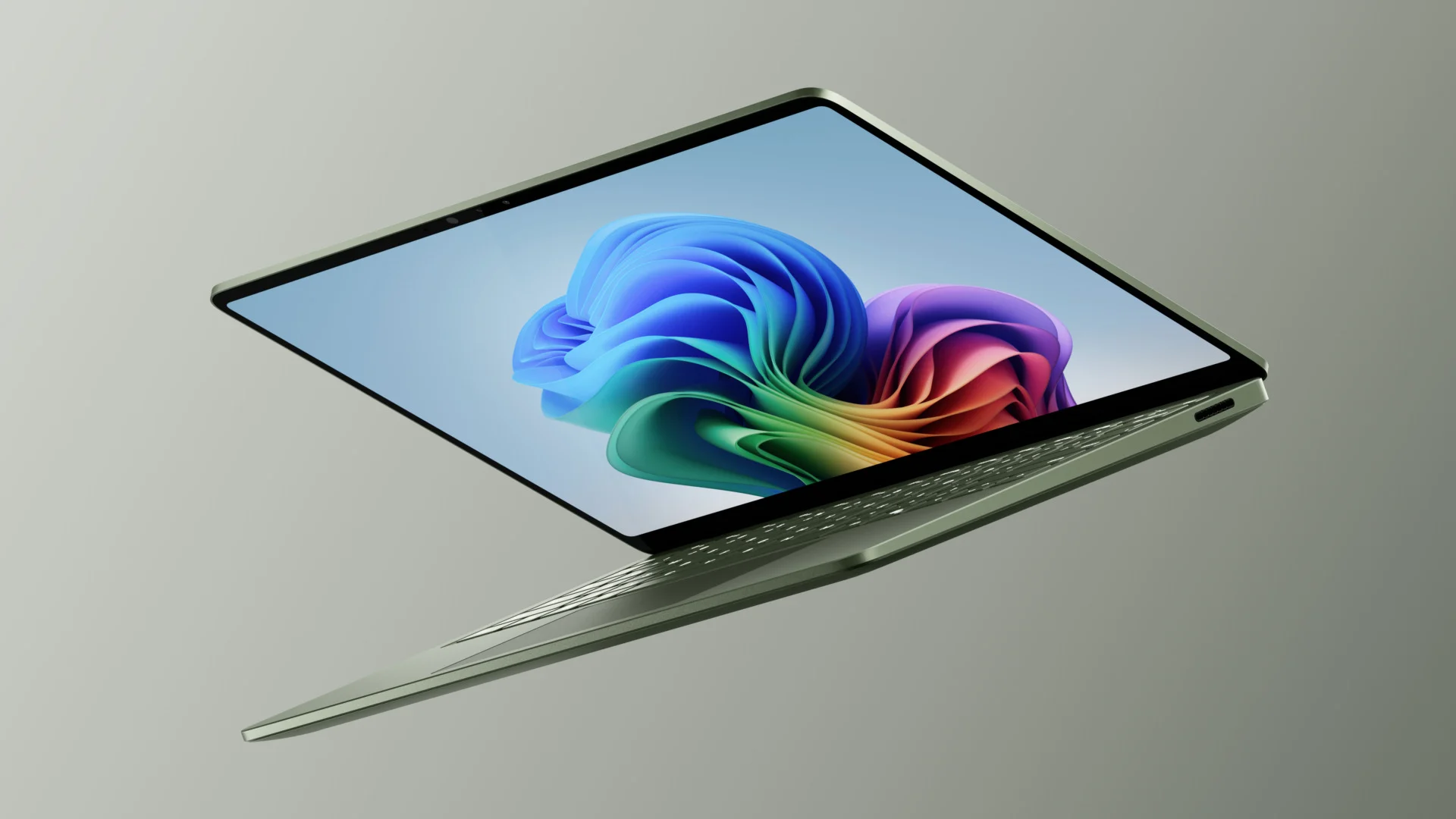
Microsoft’s revised lineup of Surface devices for the rest of us are officially—finally—the company’s “fun” laptops. The new Surface Pro and Surface Laptop feature pleasant earthy tones and unique keyboard haptics designed to soften the blow of spiking prices and lack of chip options beyond more ARM-based offerings.
These new Surface devices are very similar to the older versions, though I’ll admit that the clay-colored “Dune” Surface Pro and olive “Jade” laptop are hitting all the right notes for me. They’re far more appealing than the humdrum black and gray Surface Pro for Business lineup. In addition, Microsoft redesigned the trackpad and Slim Pen haptics to add small vibrations when users tile windows or scrub a video timeline. The haptics should, in theory, work across a multitude of apps. For instance, you should feel a small vibration when you align an image correctly in PowerPoint.
Microsoft’s VP for Surface Devices, Brett Ostrum, talked to me about the new touchpad haptics during Computex 2026. When I compared it to the old-school rumble in a controller for a more visceral experience, he said that was pretty accurate, though it’s built to work across Windows 11 and various apps.
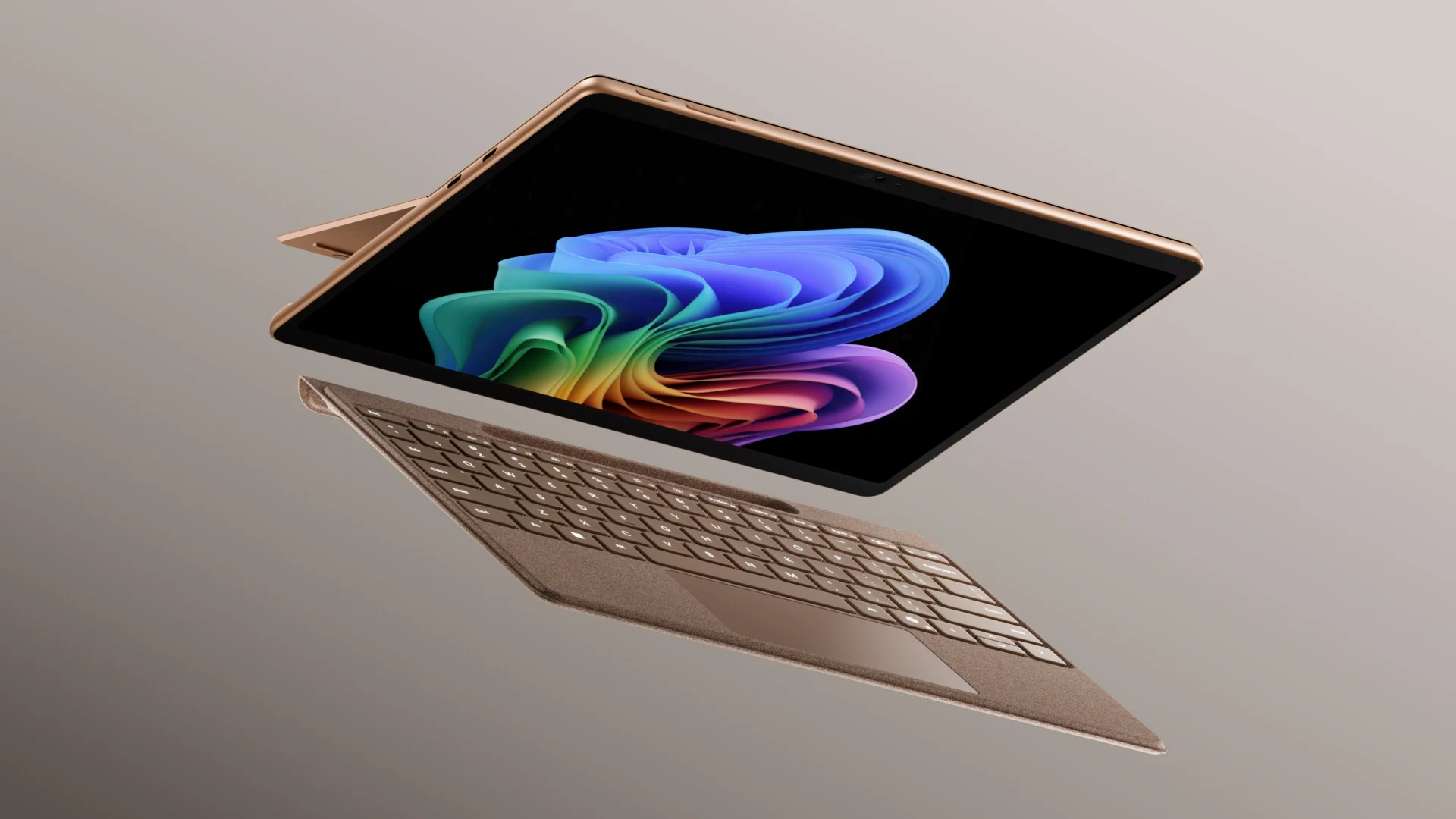
Otherwise, these devices are much the same as they were in 2024, just with slight design tweaks. While the new Surface Pro 13 still uses that bright OLED display (or LCD on the lower-end model), the new 8th-edition Surface Laptop 15 promises a better pixel density on its IPS LCD screen—261 PPI (pixels per inch) compared to 200 PPI on the last-gen model.
Unfortunately, Surface fans praying to find Intel’s Panther Lake CPUs inside the latest consumer-end Surface Pro and Surface Laptop can keep on dreaming. Unlike the Surface Pro for Business devices, the new consumer-end convertible tablet and notebooks remain exclusive to Qualcomm’s Snapdragon X2 platform. Both the 13.8-inch and 15-inch Surface Laptops come packed with either a Snapdragon X2 Plus or a Snapdragon X2 Elite chip. There’s no option for the highest-end Snapdragon X2 Elite Extreme, either.
As for memory, you’ll have a bevy of options between 16GB and 64GB of RAM as well as 512GB through 2TB of SSD storage. The minimum spec models start at $1,600, so a version with more memory will likely cost much, much more. Similarly, the Surface Pro packs in the same chip and RAM offerings for a starting price of $1,500. That’s the same starting price as the previous-gen 13-inch Surface Pro after Microsoft spiked prices due to “recent increases in memory and component costs.” We need to note that the starting Surface Pro price doesn’t include the Flex Keyboard, which will cost you another $360.
Qualcomm’s X2 platform promises a great battery life due to the company’s ARM-based chips. Not to mention, we found the more recent chips were much more powerful than the previous generation Snapdragon X lineup on an Asus Zenbook A16 packing the Snapdragon X2 Elite Extreme. The one main drawback is its GPU capabilities, which came in way behind Apple’s M-series and Intel’s latest Core Ultra Series 3 chips. Windows on ARM has come a long way since the first introduction of Copilot+ PCs in 2024. That doesn’t mean you won’t ever encounter some odd driver issue or compatibility issue with legacy Windows software.
Microsoft continues to push ARM on Windows, though it is still saving its laptop overhaul for its upcoming Surface Laptop Ultra. I saw it in person at Computex, and it’s easy to see our most anticipated new laptop will sport Nvidia’s own ARM-based N1X chip later this fall. The first processor built with Blackwell GPU cores could radically change the outlook for graphically capable PCs. We still don’t know how much the Surface Ultra could cost, but if you want to judge it by current Surface costs, you should anticipate a very, very pricey MacBook Pro competitor.
Explore more on these topics
Sign up for our newsletters
Subscribe and interact with our community, get up to date with our customised Newsletters and much more.
Related Articles

Source link