AI may end up creating more jobs than it replaces by 2030, says WEF’s Mirek Dusek
Artificial intelligence is moving beyond pilots and beginning to reshape real workplaces, with the World Economic Forum highlighting both productivity gains and fresh opportunities for jobs and entrepreneurship.
3 Min Read


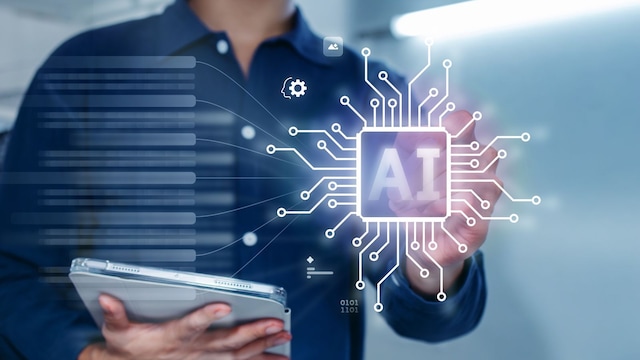
Artificial intelligence is already reshaping workplaces across industries and could eventually create more jobs than it replaces, according to Mirek Dusek, Managing Director and Chief Business Officer at the World Economic Forum (WEF).
Speaking in an exclusive interview with CNBC-TV18, Dusek said AI has moved beyond experimentation and is now beginning to affect the real economy, with companies increasingly deploying the technology across functions and workflows.
He said businesses around the world are still in the early stages of adoption, with many companies running pilot projects to understand how AI can improve productivity and efficiency.
But the larger opportunity, according to Dusek, lies in redesigning workflows and creating new forms of value through collaboration between humans and technology.
“I think the real thing — the holy grail, if you will — would be once you really scale up the way, particularly in the agentic economy, in which you are able to completely redesign workflows so that both technology and people are creating new value,” he said.
Dusek described the current phase as a “remarkable moment” for the global economy, adding that AI could become a major new source of economic growth.
“AI could unlock a completely new source of growth, really growing the pie of the world economy and the individual economies within it,” he said.
He also pointed to rising investment in AI infrastructure and growing momentum around the technology ecosystem, particularly in the United States and Silicon Valley.
According to Dusek, businesses are increasingly focused on how employees can adapt to AI-led changes through reskilling and upskilling.
“That partnership — the ability to figure out how you motivate employees, how you upskill employees, and how you make sure that by deploying these tools in your company you are also looking anew at workflows and processes — is critical,” he said.
Dusek said the World Economic Forum has been facilitating discussions between technology firms, labour economists and policymakers to better understand AI’s impact on labour markets and develop suitable policy responses.
He added that many governments are now actively trying to build regulatory and policy frameworks around AI, although approaches differ widely across regions.
“We work with political leaders from around the world, so you see different sentiments and approaches across jurisdictions,” he said.
Dusek noted that the European Union has already spent years building its AI framework, while other economies are still evaluating how to balance innovation with regulation.
Despite concerns around job displacement, Dusek said WEF research suggests AI could ultimately support net job creation over the longer term.
“In our latest Future of Jobs report from last year, research surveying think tanks and experts around the world concluded that by 2030, AI could actually be job-positive,” he said.
He also said cheaper and more accessible AI tools could drive a new wave of entrepreneurship globally, provided countries have the infrastructure and energy systems needed to support innovation.
 Also Read | AI could create more opportunities for Indian IT firms, not fewer: BofA’s Kunal Tayal
Some of the knowledge around AI’s long-term economic impact is still evolving, Dusek said, making it important for governments and businesses to continue collaborating and learning from one another.
“A lot of the knowledge is simply not there yet,” he said. “So how do you make sure that, as a policymaker, you not only rely on long-term tools and proven knowledge but also iterate sufficiently with counterparts in other governments and in industry to get things right?”
Speaking in an exclusive interview with CNBC-TV18, Dusek said AI has moved beyond experimentation and is now beginning to affect the real economy, with companies increasingly deploying the technology across functions and workflows.
“Now, is it changing work, or will it change work? It's already changing work. That's undeniable,” Dusek said.
He said businesses around the world are still in the early stages of adoption, with many companies running pilot projects to understand how AI can improve productivity and efficiency.
But the larger opportunity, according to Dusek, lies in redesigning workflows and creating new forms of value through collaboration between humans and technology.
“I think the real thing — the holy grail, if you will — would be once you really scale up the way, particularly in the agentic economy, in which you are able to completely redesign workflows so that both technology and people are creating new value,” he said.
Dusek described the current phase as a “remarkable moment” for the global economy, adding that AI could become a major new source of economic growth.
“AI could unlock a completely new source of growth, really growing the pie of the world economy and the individual economies within it,” he said.
He also pointed to rising investment in AI infrastructure and growing momentum around the technology ecosystem, particularly in the United States and Silicon Valley.
According to Dusek, businesses are increasingly focused on how employees can adapt to AI-led changes through reskilling and upskilling.
“That partnership — the ability to figure out how you motivate employees, how you upskill employees, and how you make sure that by deploying these tools in your company you are also looking anew at workflows and processes — is critical,” he said.
Dusek said the World Economic Forum has been facilitating discussions between technology firms, labour economists and policymakers to better understand AI’s impact on labour markets and develop suitable policy responses.
He added that many governments are now actively trying to build regulatory and policy frameworks around AI, although approaches differ widely across regions.
“We work with political leaders from around the world, so you see different sentiments and approaches across jurisdictions,” he said.
Dusek noted that the European Union has already spent years building its AI framework, while other economies are still evaluating how to balance innovation with regulation.
Despite concerns around job displacement, Dusek said WEF research suggests AI could ultimately support net job creation over the longer term.
“In our latest Future of Jobs report from last year, research surveying think tanks and experts around the world concluded that by 2030, AI could actually be job-positive,” he said.
He also said cheaper and more accessible AI tools could drive a new wave of entrepreneurship globally, provided countries have the infrastructure and energy systems needed to support innovation.
Some of the knowledge around AI’s long-term economic impact is still evolving, Dusek said, making it important for governments and businesses to continue collaborating and learning from one another.
“A lot of the knowledge is simply not there yet,” he said. “So how do you make sure that, as a policymaker, you not only rely on long-term tools and proven knowledge but also iterate sufficiently with counterparts in other governments and in industry to get things right?”
(Edited by : Prashant)
Source link