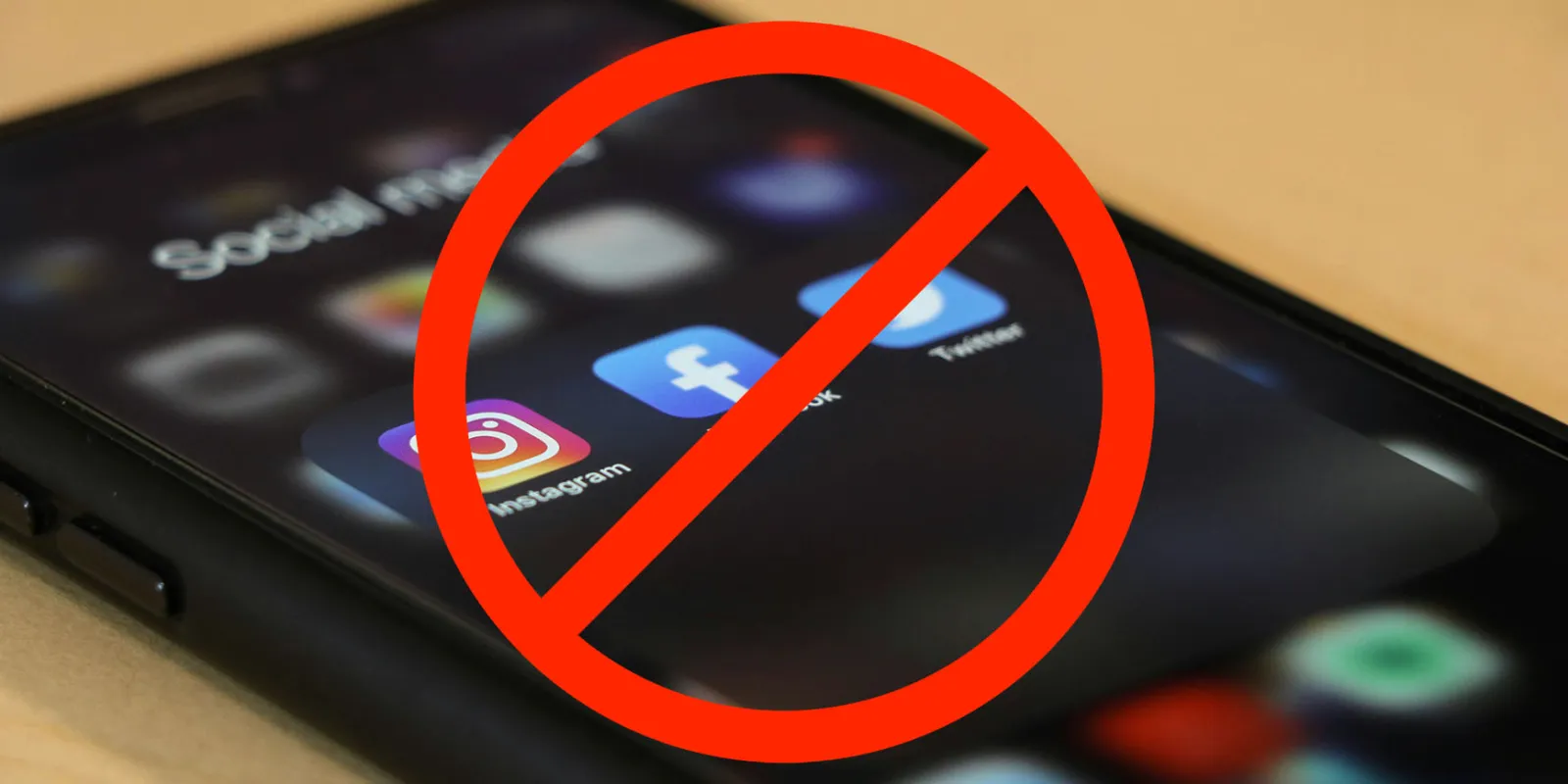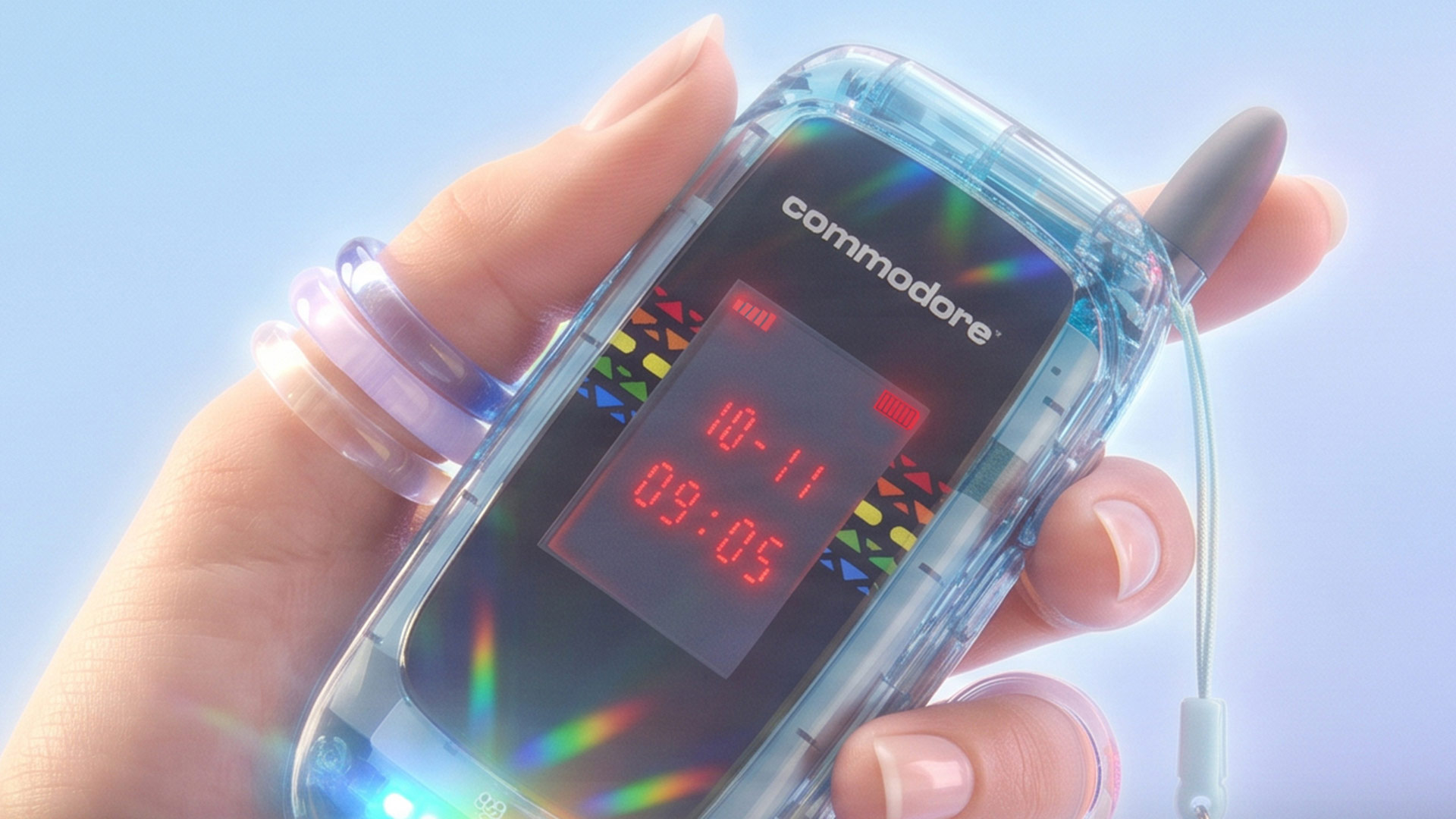
After some teasing and a couple of red herrings, Commodore today unveiled a retro-styled flip phone dubbed the Callback 8020. More specifically, the classic computing brand has showcased a Linux-based clamshell phone with “no social media, no browser* + no work or email apps.” This is its first original product designed to promote its philosophy of technology serving us, not enslaving us. It hopes to help others reap the benefits of a digital detox with the Callback, which sits flexibly between rival smart and dumb phone offerings.
- Join the Commodore Callback 8020 waitlist now to save $50.
- Pre-orders go live on June 30th at 10:00 CEST.
Before we look more closely at the Commodore Callback 8020 and its tech specs, it may be enlightening to consider what Peri Fractic, President & CEO of Commodore, says about the origin of this surprising product. In a letter to Commodore fans, he explains that the Callback 8020 is the result of his own personal journey in curing phone addiction.
After switching to an Android flip phone, in an effort to promote digital well-being, Fractic says the process involved “learning what worked, what didn’t, and what people wanted.” Thus, the Callback 8020 was designed as “the perfect middle ground between dumb and smart, and what should a Commodore phone be today?”


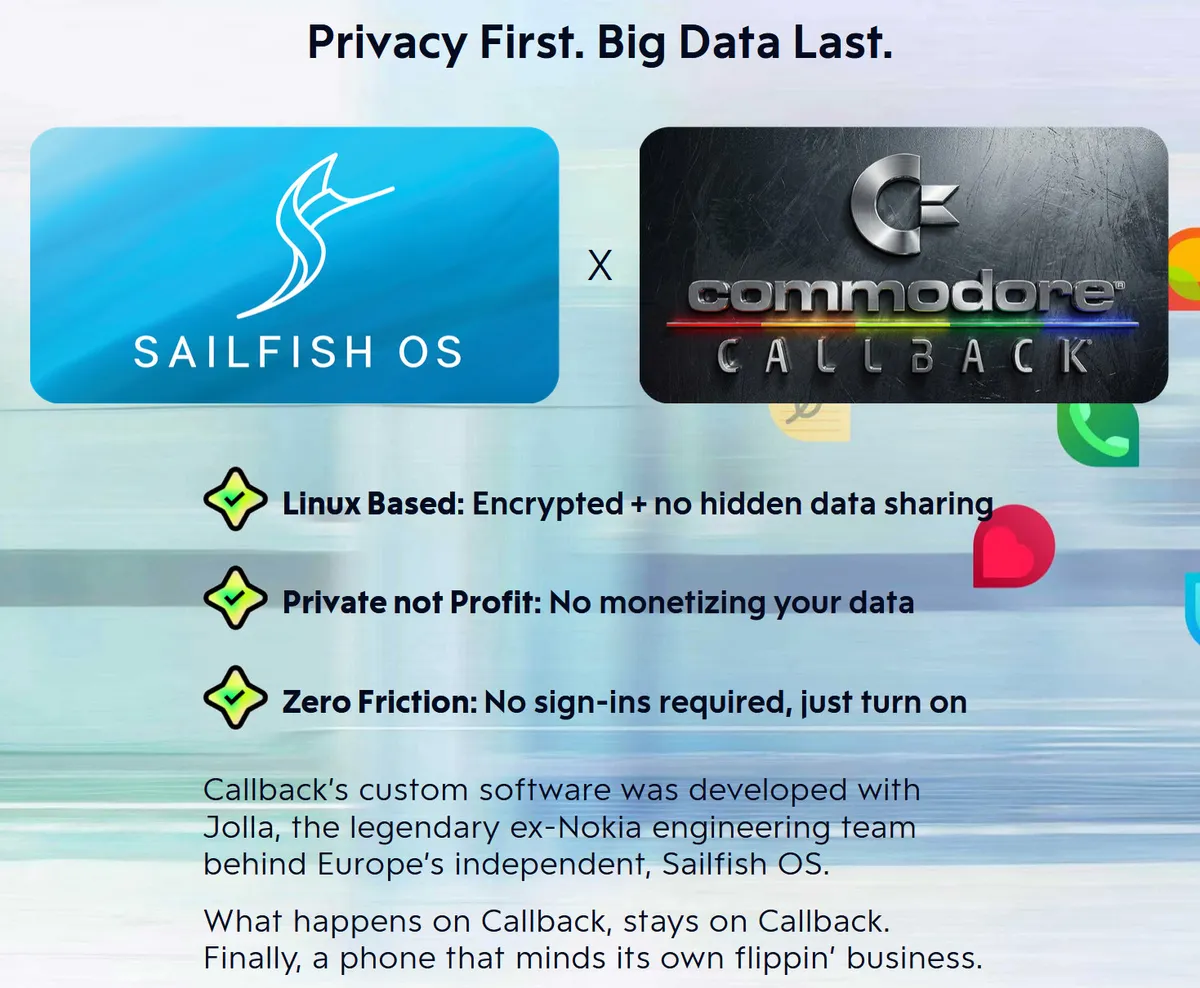
The software that has helped Commodore achieve its middle ground looks like it is basically a custom version of the Jolla Sailfish OS. Thus, it can still deliver plenty of smart functionality, partly due to the broad Android app compatibility of this Linux-based OS. So, how does Commodore ensure that the Callback “minds its own flippin’ business?”
Apparently, the OS has hard blocks to stop the installation of browsers and social media apps. We guess it has some kind of app store blacklist, as the device FAQ confirms, “Users are still able to sideload apps outside those that are blocked, using APK installer files, but Callback is designed first and foremost as a calmer, more intentional phone.”
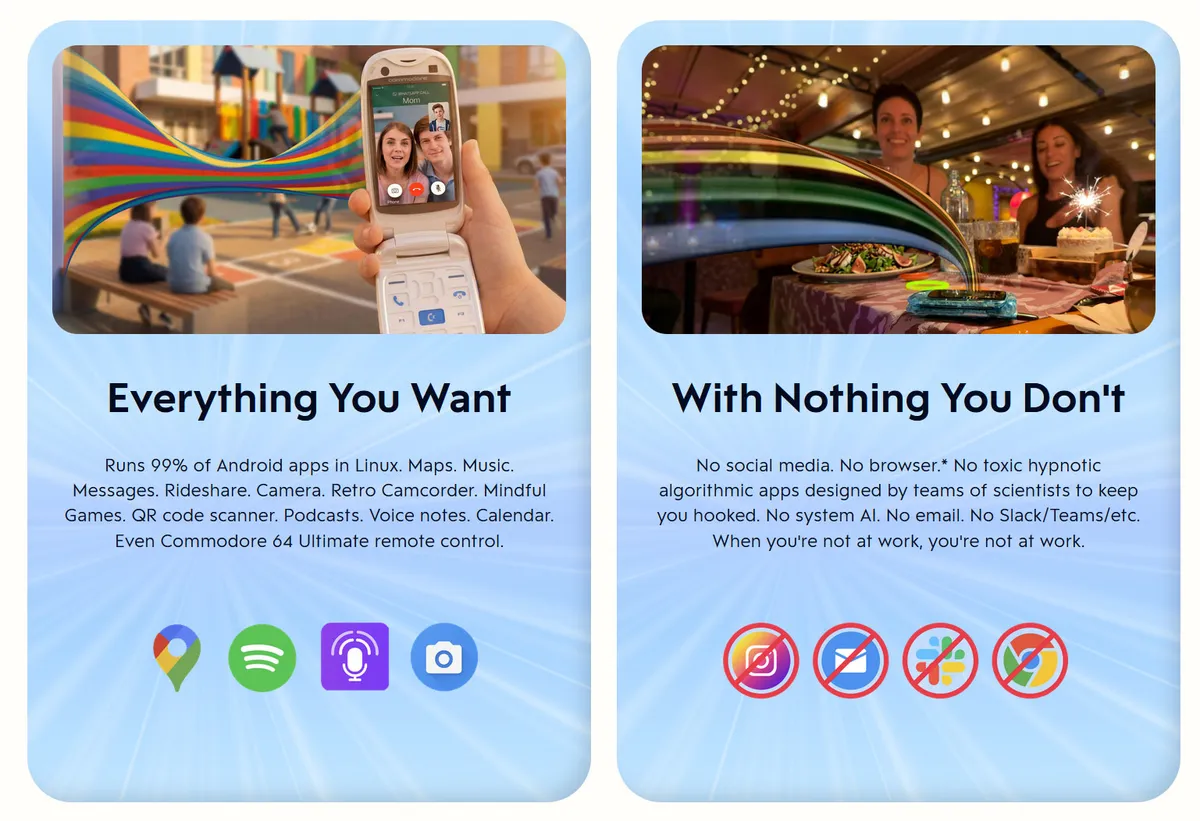
On the hardware side of things, there seem to be enough modern features to satisfy users who fit the profile of desiring an in-between smart and dumb-phone solution. It supports global LTE cellular connectivity, Wi-Fi, Bluetooth wireless, and even GPS. At the heart of the Callback is a MediaTek Helio G81 SoC, with 4GB/64GB on board. A 32GB microSD card is included to get you started, too.
Other internal components worth mentioning are the touted “audiophile-grade DAC,” which supports HD audio and lossless files, with HQ IEM (wired) earphones included in the box. Moreover, the phone’s ESS and Cirrus Logic audio chips are used to pump sounds, including its Commodore SID ringtones and built-in FM radio, to your ears.

A minimal closed clamshell display shows time and battery status, and a color LED system can be used for notifications. Opening the device, you have a 3.25-inch IPS screen with 480 x 640 pixels, a selfie camera, and a pretty ordinary-looking T9 keypad with a Commodore button.
Around the back, there’s a 48MP Sony camera with flash. The back cover is removable to swap batteries, swap the aforementioned microSD card, and access the Dual-SIM slots. Commodore is also marketing cases it calls Snapback packs, the Hardback case, and even a Backpack holster.
Finally, we are glad to hear the Callback 8020 “Ships with a modest selection of classic and modern, mindful Commodore 64 games. And with Nokia heritage, Snake of course.”
The Commodore Callback 8020 will be available in five colorways: ProtoPET White, SX Silver, BASIC Beige, Starlight Edition, and a (gold) Founders Edition. Pricing starts at $499, but there is $50 off for those joining the waitlist. Pre-orders begin at the end of this month.

Follow Tom's Hardware on Google News, or add us as a preferred source, to get our latest news, analysis, & reviews in your feeds.

Source link