Gates Foundation funds AI retinal scans to detect pregnancy complications across Africa and India
Remidio has received a Gates Foundation grant to use AI-powered retinal scans to screen pregnant women for pre-eclampsia and diabetes across Africa and India, where 84% of stillbirths occur.
3 Min Read


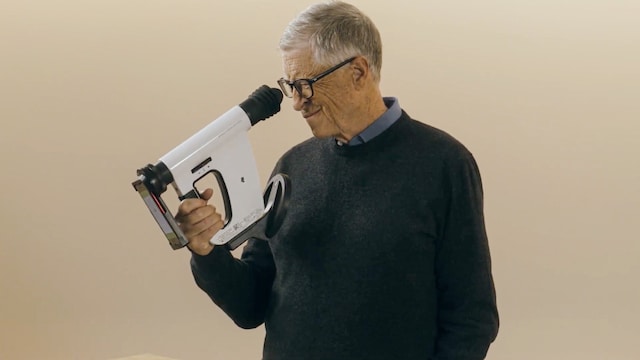
Remidio Innovative Solutions has secured a grant from the Bill & Melinda Gates Foundation to bring its AI-powered retinal imaging platform into maternal healthcare across Africa and India.
The funding will support efforts to use retinal scans to screen pregnant women for pre-eclampsia, anemia, and gestational diabetes mellitus (GDM) — conditions that remain poorly detected in low- and middle-income countries (LMICs) due to a lack of diagnostic infrastructure.
Hypertensive disorders of pregnancy, particularly pre-eclampsia, are among the leading causes of these deaths. They also contribute to an estimated 42,000 maternal deaths each year. GDM compounds the burden further, affecting roughly one in six pregnancies worldwide, with the highest rates concentrated in the same regions.
Together, these conditions drive significant rates of stillbirth, preterm birth, and long-term cardiovascular and metabolic complications in both mothers and children.
The Diagnostic Gap
Detecting these conditions early requires laboratory assays, biochemical biomarkers, and Doppler-based assessments. These tools depend on laboratory infrastructure, trained personnel, and functioning referral pathways — none of which are reliably available at the community level in most LMICs. For the majority of pregnant women in these regions, early risk assessment simply does not happen.
"The women most at risk from pre-eclampsia and gestational diabetes are often the least likely to reach a laboratory or a specialist in time," said Dr. Anand Sivaraman, CEO and Founding Director of Remidio.
Why the Retina
The retina is the only part of the body where blood vessels can be observed directly without an invasive procedure. This makes it a clinically useful window into systemic vascular and metabolic changes — including those associated with pre-eclampsia and GDM.
The biological link between retinal microvascular changes and systemic disease is well established, and Remidio's AI models have been trained and validated on large, diverse image datasets to detect these patterns.
"The microvascular and metabolic changes associated with pre-eclampsia and gestational diabetes leave detectable signatures," said Dr. Divya Rao, Chief Medical Officer and Head of AI at Remidio. "Evidence, not assumption, will decide where this proves useful."
Scaling at the Frontline
Remidio's platform uses a portable, smartphone-based fundus camera that can be operated by frontline health workers with minimal training. A retinal scan takes seconds. The platform is already deployed across primary care and community screening programs for diabetic retinopathy, glaucoma, and age-related macular degeneration (AMD).
The Gates Foundation grant will extend this into antenatal care, with implementation across partner sites in Africa and India — the regions that together account for the largest share of global maternal and perinatal mortality.
The funding will support efforts to use retinal scans to screen pregnant women for pre-eclampsia, anemia, and gestational diabetes mellitus (GDM) — conditions that remain poorly detected in low- and middle-income countries (LMICs) due to a lack of diagnostic infrastructure.
The scale of preventable maternal and perinatal deaths in LMICs makes the case for new screening tools. Around 2 million stillbirths occur every year globally — one every 16 seconds — and 84% happen in LMICs.
Hypertensive disorders of pregnancy, particularly pre-eclampsia, are among the leading causes of these deaths. They also contribute to an estimated 42,000 maternal deaths each year. GDM compounds the burden further, affecting roughly one in six pregnancies worldwide, with the highest rates concentrated in the same regions.
Together, these conditions drive significant rates of stillbirth, preterm birth, and long-term cardiovascular and metabolic complications in both mothers and children.
The Diagnostic Gap
Detecting these conditions early requires laboratory assays, biochemical biomarkers, and Doppler-based assessments. These tools depend on laboratory infrastructure, trained personnel, and functioning referral pathways — none of which are reliably available at the community level in most LMICs. For the majority of pregnant women in these regions, early risk assessment simply does not happen.
"The women most at risk from pre-eclampsia and gestational diabetes are often the least likely to reach a laboratory or a specialist in time," said Dr. Anand Sivaraman, CEO and Founding Director of Remidio.
Why the Retina
The retina is the only part of the body where blood vessels can be observed directly without an invasive procedure. This makes it a clinically useful window into systemic vascular and metabolic changes — including those associated with pre-eclampsia and GDM.
The biological link between retinal microvascular changes and systemic disease is well established, and Remidio's AI models have been trained and validated on large, diverse image datasets to detect these patterns.
"The microvascular and metabolic changes associated with pre-eclampsia and gestational diabetes leave detectable signatures," said Dr. Divya Rao, Chief Medical Officer and Head of AI at Remidio. "Evidence, not assumption, will decide where this proves useful."
Scaling at the Frontline
Remidio's platform uses a portable, smartphone-based fundus camera that can be operated by frontline health workers with minimal training. A retinal scan takes seconds. The platform is already deployed across primary care and community screening programs for diabetic retinopathy, glaucoma, and age-related macular degeneration (AMD).
The Gates Foundation grant will extend this into antenatal care, with implementation across partner sites in Africa and India — the regions that together account for the largest share of global maternal and perinatal mortality.
First Published: Jun 10, 2026 9:02 AM IST
Source link