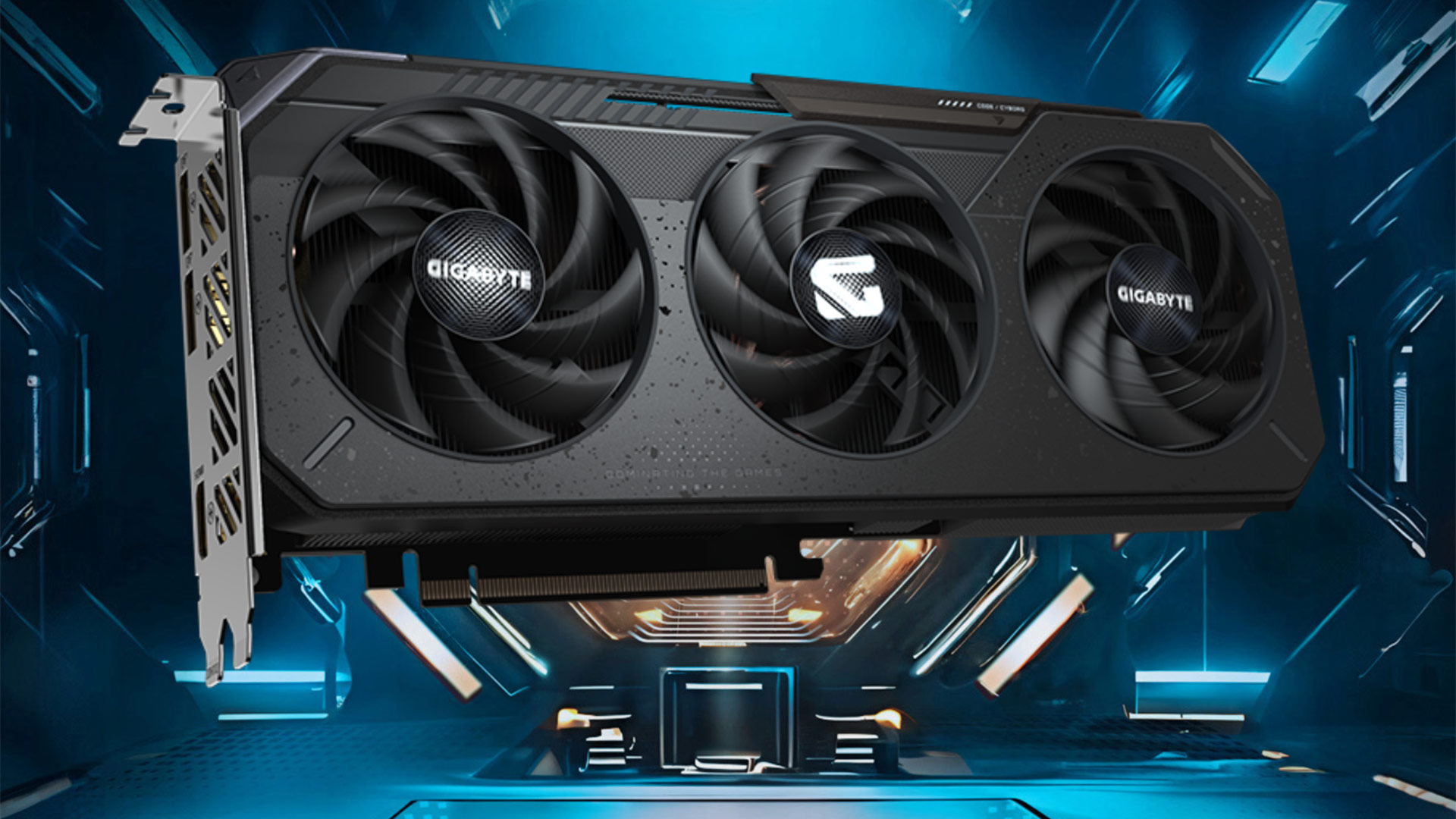
Radeon RX 9070 XT finally appears in Steam Hardware Survey — RDNA 4 flagship surprisingly lands just behind RTX 5080
It took the 9070 XT about 15 months to make a dent, but it’s here now, alongside the RX 9070 and RX 9060 XT.
AMD’s Radeon RX 9070 XT graphics card has finally penetrated the Steam Survey video card user-share table. The complete set of new-generation RDNA 4 graphics cards data from AMD is now nestled within the Steam gamer popularity tables, with the performance-leading RX 9070 XT highest placed at position 25. AMD took the wraps off the RX 9070 XT and regular RX 9070 at a special event in Feb 2025, with availability starting from March 2025. The RX 9060 XT was a Computex 2025 (~end of May) launch. So the charting of the family has been a long time coming.
Valve doesn’t publicly state a minimum share threshold for inclusion in the results table, but whatever formula lies behind it, the numbers must have climbed sufficiently by May 2026 for the complete Radeon RX 9000 family to now make the grade. Notably, with its newfound data, the RX 9070 XT's 1.35% share sits just a shade behind the RTX 5080, which has 1.52%.
Green Team context and AMD’s leading mystery GPU
Nvidia dominates the Steam GPUs chart, as you may expect. The current leader of the Steam GPUs pack is the time-tested Nvidia GeForce RTX 3060 with a 4.02% share according to the newest survey. Positions two and three are the laptop (3.99%) and desktop (3.74%) versions of the RTX 4060, so some would call this Ada Lovelace GPU the real champion of champions.

Currently, the highest placed Red Team GPU is the nebulous ‘AMD Radeon Graphics’ at position 13 and 1.89% share. Some observers reckon this Steam entry impacts the tally of named models, as the Steam Client miscategorizes discrete models for some reason, perhaps due to some iGPU + GPU combos. There are also two other instances of ‘AMD Radeon(TM) Graphics’ in the table, muddying the waters.
At position 39, the RX 9060 XT has made its debut with a reported 0.72% share of Steam users gaming on this mid-ranger. The stats don’t differentiate between the 8GB and 16GB variants of this card.
We have to go all the way down to position 90 to see the Radeon RX 9070 non-XT graphics card. It has a user share of 0.18% according to the figures. For some reason, this efficiency king among GPUs has been present in the Steam Survey much longer than its brethren. We mentioned it popping up with just a 0.16% market share at the start of this year. The revised 0.18% figure doesn’t show spectacular growth, despite some of the praise heaped on this SKU. However, since the pricing of our current best-pick all-around enthusiast graphics card, the RX 9070 XT, can be so close, it’s probably not surprising that the non-XT is overshadowed.
AMD recently launched the RX 9070 GRE worldwide. This 12GB variant of the RX 9070 has been available for months in the Far East, but we aren’t surprised it hasn’t entered the Steam Survey yet (if it will ever make it).
Get Tom's Hardware's best news and in-depth reviews, straight to your inbox.

Follow Tom's Hardware on Google News, or add us as a preferred source, to get our latest news, analysis, & reviews in your feeds.

Mark Tyson is a news editor at Tom's Hardware. He enjoys covering the full breadth of PC tech; from business and semiconductor design to products approaching the edge of reason.
-
salgado18 This news speak more about the survey that the card. Suddenly it is tied to the 5080? Surely someone bought it in the past months, why now? I think unless the survey methodology is made public, and is statisticaly correct, it shouldn't ever become news, as it's a potentially misleading information.Reply -
palladin9479 Replysalgado18 said:This news speak more about the survey that the card. Suddenly it is tied to the 5080? Surely someone bought it in the past months, why now? I think unless the survey methodology is made public, and is statisticaly correct, it shouldn't ever become news, as it's a potentially misleading information.
Because AMD sells far less consumer GPU's then nVIdia, far far less. That causes their relative representation to be very small compared to nVidia and Intel in the randomly sampled population of over 100 million users.
https://store.steampowered.com/hwsurvey/Steam-Hardware-Software-Survey-Welcome-to-Steam
You can go to the GPU's and see the distribution. The most common are going to be the ones that OEM's like Dell and HP stick in systems, the nVidia 50 and 60 models with 8GB of VRAM and the screen resolution of 1920x1080.
Instead of just reading the articles generic words it might be best to see the actual data.
AMD Radeon RX 9060 XT (0.73%)
AMD Radeon RX 9070 (0.17%)
AMD Radeon RX 9070 XT (1.24%)
NVIDIA GeForce RTX 4060 (3.55%)
NVIDIA GeForce RTX 4060 Ti (2.32%)
(There are 4~5 different 4070 models)
NVIDIA GeForce RTX 4080 (0.66%)
NVIDIA GeForce RTX 4080 SUPER (0.64%)
NVIDIA GeForce RTX 4090 (0.73%)
NVIDIA GeForce RTX 5060 (2.43%)
NVIDIA GeForce RTX 5060 Ti (1.95%)
NVIDIA GeForce RTX 5080 (1.40%)
NVIDIA GeForce RTX 5090 (0.41%)
But by far the biggest category is
Other (9.25%)
I mean Other is just crushing every other manufacturer, nVidia and AMD should totally give up selling GPU's in favor of Other GPUs.
Previously the 9070XT was included in the "other" category because there wasn't enough of them surveyed to hit the top list. Notice there aren't any 9060's listed, not because they aren't in existence but because their surveyed quantity is too small to hit the named list.
The way these metrics work is that you get a total list of 100+ unique vendor SKU's. You show the highest 20/30 (or whatever number your chart has space for) items with everything else counting towards a catch all category. Over time older card representation gets smaller and smaller while newer card representation grows bigger and bigger. Eventually older cards start rolling off the list opening slots for other cards to make the list.
NVIDIA GeForce GTX 1650 (2.57%)
NVIDIA GeForce GTX 1650 Ti (0.38%)
NVIDIA GeForce GTX 1650 SUPER (0.29%)
NVIDIA GeForce GTX 1080 (0.42%)
NVIDIA GeForce GTX 1080 Ti (0.32%)
We can still see some 960's and 970's on that list but no 980's but each survey has them getting smaller and smaller. While the 9070XT is a newer card and there simply hasn't been enough sold to make a dent in the total global GPU population on Steam clients. People get too myopic believing they live in a world where everyone on the planet buys a new GPU every generation. Only a very small, yet very vocal and overrepresented, subset of the global PC population buys GPU's that often. The overwhelming majority buy new stuff every four to six years, sometimes every ten years. Quite often that population buys second hand or older model unsold GPUs.
Thus it's completely predictable that an lower volume model from a minority vendor would take a very long time to get enough global market share to make a dent in the statistics. -
salgado18 Reply
Ok, but assume their margin of error is 2% (could be higher, but probably not lower). Then almost every GPU is within margin of error, and 1.5% could mean almost none or up to 3.5%. One GPU with 0.5% could have more cards in reality than one with 2%, simply because of this margin. And we don't know what the margin is or how they collect, so their statistics are almost useless for GPUs.palladin9479 said:Because AMD sells far less consumer GPU's then nVIdia, far far less. That causes their relative representation to be very small compared to nVidia and Intel in the randomly sampled population of over 100 million users.
https://store.steampowered.com/hwsurvey/Steam-Hardware-Software-Survey-Welcome-to-Steam
You can go to the GPU's and see the distribution. The most common are going to be the ones that OEM's like Dell and HP stick in systems, the nVidia 50 and 60 models with 8GB of VRAM and the screen resolution of 1920x1080.
Instead of just reading the articles generic words it might be best to see the actual data.
AMD Radeon RX 9060 XT (0.73%)
AMD Radeon RX 9070 (0.17%)
AMD Radeon RX 9070 XT (1.24%)
NVIDIA GeForce RTX 4060 (3.55%)
NVIDIA GeForce RTX 4060 Ti (2.32%)
(There are 4~5 different 4070 models)
NVIDIA GeForce RTX 4080 (0.66%)
NVIDIA GeForce RTX 4080 SUPER (0.64%)
NVIDIA GeForce RTX 4090 (0.73%)
NVIDIA GeForce RTX 5060 (2.43%)
NVIDIA GeForce RTX 5060 Ti (1.95%)
NVIDIA GeForce RTX 5080 (1.40%)
NVIDIA GeForce RTX 5090 (0.41%)
But by far the biggest category is
Other (9.25%)
I mean Other is just crushing every other manufacturer, nVidia and AMD should totally give up selling GPU's in favor of Other GPUs.
Previously the 9070XT was included in the "other" category because there wasn't enough of them surveyed to hit the top list. Notice there aren't any 9060's listed, not because they aren't in existence but because their surveyed quantity is too small to hit the named list.
The way these metrics work is that you get a total list of 100+ unique vendor SKU's. You show the highest 20/30 (or whatever number your chart has space for) items with everything else counting towards a catch all category. Over time older card representation gets smaller and smaller while newer card representation grows bigger and bigger. Eventually older cards start rolling off the list opening slots for other cards to make the list.
NVIDIA GeForce GTX 1650 (2.57%)
NVIDIA GeForce GTX 1650 Ti (0.38%)
NVIDIA GeForce GTX 1650 SUPER (0.29%)
NVIDIA GeForce GTX 1080 (0.42%)
NVIDIA GeForce GTX 1080 Ti (0.32%)
We can still see some 960's and 970's on that list but no 980's but each survey has them getting smaller and smaller. While the 9070XT is a newer card and there simply hasn't been enough sold to make a dent in the total global GPU population on Steam clients. People get too myopic believing they live in a world where everyone on the planet buys a new GPU every generation. Only a very small, yet very vocal and overrepresented, subset of the global PC population buys GPU's that often. The overwhelming majority buy new stuff every four to six years, sometimes every ten years. Quite often that population buys second hand or older model unsold GPUs.
Thus it's completely predictable that an lower volume model from a minority vendor would take a very long time to get enough global market share to make a dent in the statistics. -
palladin9479 Replysalgado18 said:Ok, but assume their margin of error is 2% (could be higher, but probably not lower).
It's much much lower then that, less then 1%.
Handy calculator for figuring out confidence and error rate.
https://uk.surveymonkey.com/learn/research-and-analysis/sample-size-calculator/
Steam currently has a sampled population of 120,000,000 ~ 132,000,000 clients and every client has the capability to participate in the survey, so unlike social studies where you can only do a few thousand at a time, they can potentially do millions of samples.
At 120,000,000 population and 99% confidence level you only need 66,528 random samples to achieve an error bar of 0.5%. If they wanted a 0.1% margin of error they would need 1,641,339 random samples. 1.6 million sounds like a lot, but they have over 120,000,000 to chose from, meaning they only need slightly over 1% of their population to participate in the survey.
That makes the Steam Hardware Surveys one of the most accurate statistical analysis of a randomized population on the planet. If you were to tell any medical or social scientist that they could gather near perfect data from over a million randomly sampled people from a population of over 120 million, they would consider it a perfect scenario. Yet because people have brand loyalties and preconceived beliefs of what's "correct", they mentally refuse to accept anything that would contradict those beliefs.
Tell some tech enthusiast, which we all are on here, that 51.8% of "PC gamers" are using 1080p monitors, 21.2% use 1440p and only 5% use 2160p, and they would could you a liar insisting that 1080p is old news and "everyone" moved on to bigger resolutions. Tell them that over half of the PC gaming population is using GPU's with 8GB or less of VRAM, and they would again call you a liar because, as they know, all games now require 12GB or more. Present them with data and they would just call your data wrong, never stopping to question their preconceived notions and participation in a self selected community that is significantly deviated from the median.
Caveat to some definitions because this is the land of "well acktually". The Steam Hardware Survey collects near perfect statistics from the population of personal computers with the Steam client installed. This doesn't include consoles, work computers, business laptops, workstations and other personal computers that might not be running the Steam client. Since Steam is the largest and most popular gaming distribution platform on the planet, it is reasonable to assume that most people falling into the "PC gamer" category would have it installed and therefor be included in the surveyed population. This is what is known as "proxy data", when one set of statistics are used as a proxy to measure something that would otherwise be difficult to measure directly. It's a very common practice in social, medical and environment sciences.
https://en.wikipedia.org/wiki/Proxy_(statistics) -
thestryker Reply
The problem is that we don't really know any of their methodology. Over the years they've also had some anomalous statistics (seemingly due to which part of their population happened to get polled) and reporting bugs. Most of the more zoomed out things like resolution, processor brand, DRAM capacity, core count and VRAM capacity are probably correct. Without any transparency there isn't any reason to trust that the fine grained details are accurate though.palladin9479 said:Steam currently has a sampled population of 120,000,000 ~ 132,000,000 clients and every client has the capability to participate in the survey, so unlike social studies where you can only do a few thousand at a time, they can potentially do millions of samples. -
salgado18 Reply
Yes, but can you guarantee that they get a good sample of the population? Meaning a sample proportional to country, age, income, etc. Without knowing that, sample size is meaningless.palladin9479 said:It's much much lower then that, less then 1%.
Handy calculator for figuring out confidence and error rate.
https://uk.surveymonkey.com/learn/research-and-analysis/sample-size-calculator/
Steam currently has a sampled population of 120,000,000 ~ 132,000,000 clients and every client has the capability to participate in the survey, so unlike social studies where you can only do a few thousand at a time, they can potentially do millions of samples.
At 120,000,000 population and 99% confidence level you only need 66,528 random samples to achieve an error bar of 0.5%. If they wanted a 0.1% margin of error they would need 1,641,339 random samples. 1.6 million sounds like a lot, but they have over 120,000,000 to chose from, meaning they only need slightly over 1% of their population to participate in the survey.
That makes the Steam Hardware Surveys one of the most accurate statistical analysis of a randomized population on the planet. If you were to tell any medical or social scientist that they could gather near perfect data from over a million randomly sampled people from a population of over 120 million, they would consider it a perfect scenario. Yet because people have brand loyalties and preconceived beliefs of what's "correct", they mentally refuse to accept anything that would contradict those beliefs.
Tell some tech enthusiast, which we all are on here, that 51.8% of "PC gamers" are using 1080p monitors, 21.2% use 1440p and only 5% use 2160p, and they would could you a liar insisting that 1080p is old news and "everyone" moved on to bigger resolutions. Tell them that over half of the PC gaming population is using GPU's with 8GB or less of VRAM, and they would again call you a liar because, as they know, all games now require 12GB or more. Present them with data and they would just call your data wrong, never stopping to question their preconceived notions and participation in a self selected community that is significantly deviated from the median.
Caveat to some definitions because this is the land of "well acktually". The Steam Hardware Survey collects near perfect statistics from the population of personal computers with the Steam client installed. This doesn't include consoles, work computers, business laptops, workstations and other personal computers that might not be running the Steam client. Since Steam is the largest and most popular gaming distribution platform on the planet, it is reasonable to assume that most people falling into the "PC gamer" category would have it installed and therefor be included in the surveyed population. This is what is known as "proxy data", when one set of statistics are used as a proxy to measure something that would otherwise be difficult to measure directly. It's a very common practice in social, medical and environment sciences.
https://en.wikipedia.org/wiki/Proxy_(statistics)
Then explain (well, Valve should do it) why the strongest AMD card from last year only showed up this month, and in a percentage far bigger than some other cards. It's not a minimum quantity requirement, since many cards have much lower shares and show up every time.
By the way, has anyone done a graph of gpu share over time? Not by vendor, but by model. And not aggregating Other, as detailed as it can be. Curious to see it there are other inconsistencies like that. -
dion_ Reply
A card that slowly accumulates until it crosses the display threshold appears AT that threshold and then climbs. You can read the threshold straight off the chart: the RX 9070 debuted in December at 0.22%, then sat at 0.16–0.18% for months, and there are named entries down near 0.17%. So a genuine threshold-crossing debut looks like ~0.17%. The 9070 XT did not just cross the threshold — it went from a dash to 1.33% in one update, roughly eight times the threshold, smoking a stack of RTX 30/40 cards. A continuous quantity cannot step from <0.17% to 1.33% in a month. So either it grew ~1.2 percentage points in thirty days (which contradicts your own "low-volume vendor accumulates market share slowly" thesis), or it was already somewhere between 0.17% and 1.33% and simply wasn't being named properly. It was far more likely sitting inside the "AMD Radeon(TM) Graphics" bucket, which lost ~1.5 percentage points month-to-month, which is a substantial drop.palladin9479 said:Previously the 9070XT was included in the "other" category because there wasn't enough of them surveyed to hit the top list. Notice there aren't any 9060's listed, not because they aren't in existence but because their surveyed quantity is too small to hit the named list. -
dion_ Closing the gap on the RTX 5080 in the June survey. All I have to do is unbox and install my 9070 XT. Watch.Reply -
Mcnoobler Reply
My ROG Ally shows "AMD Radeon Graphics" with no mention of a name or model. Based on all of my own hardware, I don't think Steam hardware is accurate, but gives you a general idea of the hardware for Steam users who choose to report. My Rog Ally X though has never been reported in Steam, because well, it doesn't really use Steam.dion_ said:A card that slowly accumulates until it crosses the display threshold appears AT that threshold and then climbs. You can read the threshold straight off the chart: the RX 9070 debuted in December at 0.22%, then sat at 0.16–0.18% for months, and there are named entries down near 0.17%. So a genuine threshold-crossing debut looks like ~0.17%. The 9070 XT did not just cross the threshold — it went from a dash to 1.33% in one update, roughly eight times the threshold, smoking a stack of RTX 30/40 cards. A continuous quantity cannot step from <0.17% to 1.33% in a month. So either it grew ~1.2 percentage points in thirty days (which contradicts your own "low-volume vendor accumulates market share slowly" thesis), or it was already somewhere between 0.17% and 1.33% and simply wasn't being named properly. It was far more likely sitting inside the "AMD Radeon(TM) Graphics" bucket, which lost ~1.5 percentage points month-to-month, which is a substantial drop.
It is true though, for myself, that in real life... I know not a single person with a desktop AMD GPU. Yet on the internet, everyone seems to have AMD GPUs. But I personally find the internet and real life to be two different worlds. Since I'm not home often, I use my Rog Ally X the majority of the time vs my 4090 PC at home. Based on RDNA 3 in which I wipe all AMD apps and features, and use lossless scaling instead... I can personally see why AMD GPUs don't show up as much as Nvidia GPUs. To this day, I come home to test out new feature sets for the 40 series. My RDNA 3, the best an update can do is keep it the same, or an update at worst breaks things.
Everyone I know has an AMD CPU for their desktop though. I personally have an Intel in my desktop for reasons you can't discuss anymore, but as far as GPUs go, to myself as a user of both, it is pretty clear why Nvidia sells more desktop/laptop GPUs. But... Steam surveys measure Steam users. Not all gamers are Steam users.
The irony though, in my home right now, is 5 AMD CPUs, 5 AMD GPUs, and 1 Intel CPU/Nvidia 4090. Only 1 uses Steam (Intel/4090), and 4 are consoles + 1 handheld. Those are real AMD hardware sales still, even if Steam is only aware of 1.
Source link