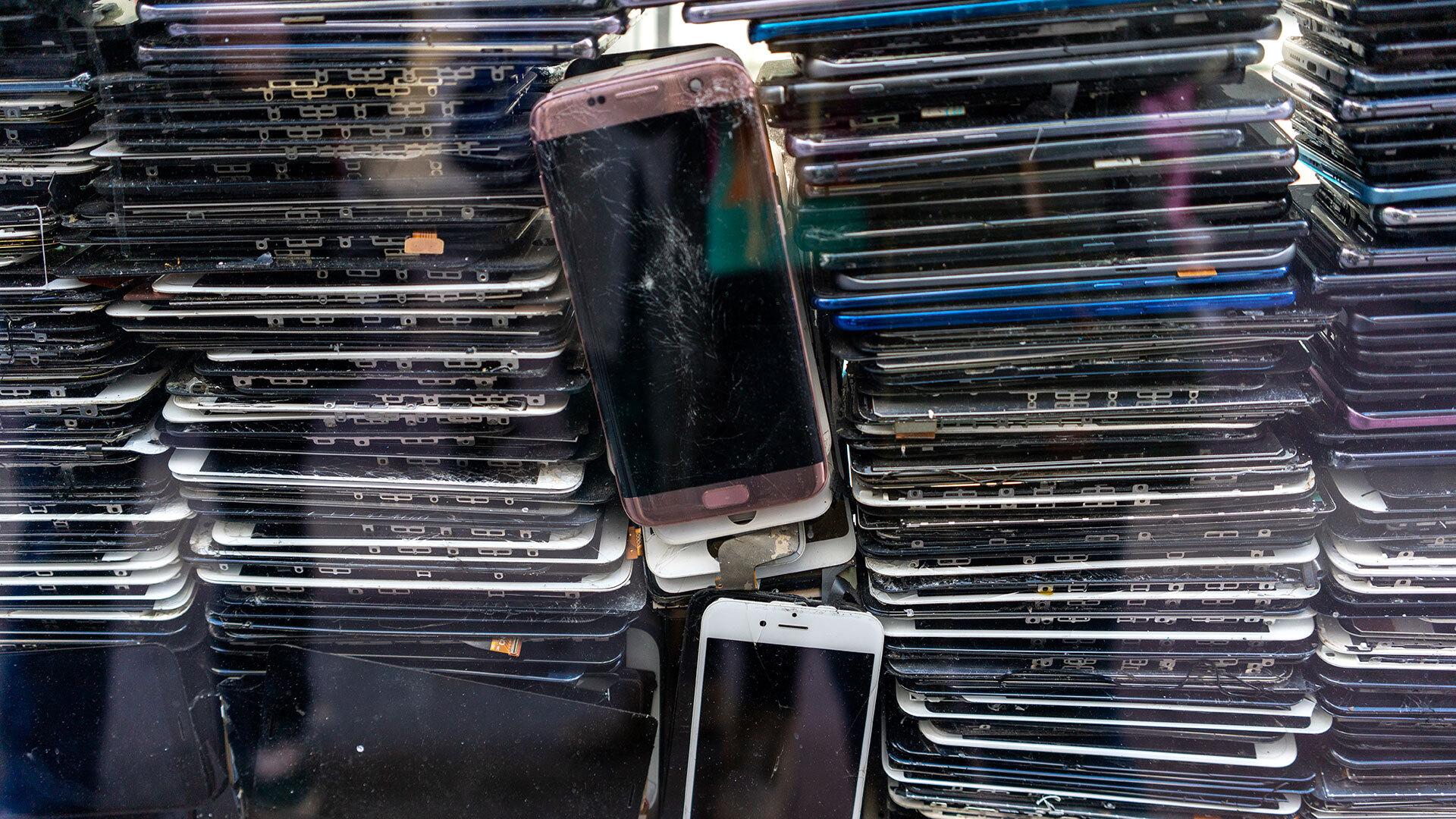
Researchers from the University of California San Diego (UCSD) collaborated with Google to recycle “old” Pixel smartphones and give them a second life as a low-cost data center. According to Google Research, retired smartphones are part of the “embodied carbon” that is associated with manufacturing and its carbon footprint. In fact, humanity’s penchant for mobile devices and replacing them every few years is one of the biggest contributors to e-waste, so the group from UCSD planned to give these discarded devices a second life as a “general-purpose computing platform.”

The study revealed that smartphones from just three years ago still deliver a higher single-core performance compared to servers like the Asus RS720A-E11, which can be equipped with Nvidia H200 or Nvidia RTX Pro 6000 GPUs and two AMD EPYC server processors, that you frequently find in the most powerful data centers. While the latter delivers performance that a mobile device can’t even dream of, the fact that the former still scored higher in the SPEC benchmarking suite on a per-core basis meant that researchers could still use them for compute tasks with a little creativity.
The first thing they did was to strip these gadgets of non-essential components — displays, batteries, cameras, speakers, chassis, etc. Only the motherboard remains, as it plays host to the SoC needed for running compute. The Android operating system is then replaced with a general-purpose Linux distro used in data center applications, which removes unnecessary bloat found in the original consumer device and allows for the deployment of orchestration software like Kubernetes. Benchmarking results revealed that 25 to 50 old phones wereequal to the computing power of a single dual-socket server-class CPU.

UCSD determined that a 20-phone cluster can support one application that a 75+ student class requires. So, instead of hosting it on the cloud, which would entail additional costs and resource use on the data center side, it could instead run these apps on a local deployment of these used smartphones. The research team plans to use 2,000 phones to build a local data center that can support “a hundred such classes at once.” Aside from getting the advantage of running apps locally and owning the hardware needed for them, the group also says that it’s only a “fraction of the usual cost,” likely referring to building a local server made from new components. This is especially true today, with the increased pricing for memory and storage chips.
The research team says that it expects to launch the full system later this year and is looking to see how consumer parts can withstand continuous use in a data center application. But even if the experiment is successful, we don’t foresee AI hyperscalers switching to servers made from used phone parts as they would often want to work with fewer parts and the reliability delivered by specialized hardware. Still, this is a great option for universities and educational institutions, as well as smaller entities that do not have the resources to secure brand-new parts and compete against tech giants with billions of dollars to burn.
This isn’t the first time scientists have looked at giving old phones a second life — another group of researchers looked at converting old phones into “tiny data centers” last year, even using one set of four old devices for underwater monitoring. After all, even though the SoCs found in these devices are considered “outdated” by modern standards, they should still be more than capable enough for many mundane tasks. NASA even repurposed the Qualcomm 801 SoC, a mid-range chip from 2014 and found in the Ingenuity Mars helicopter, to help the Perseverance rover find its way around the Red Planet like some sort of processor for a makeshift GPS. And for smartphones that no longer work, people are finding ways to extract the gold and other resources found on their boards for recycling.

Follow Tom's Hardware on Google News, or add us as a preferred source, to get our latest news, analysis, & reviews in your feeds.

Source link