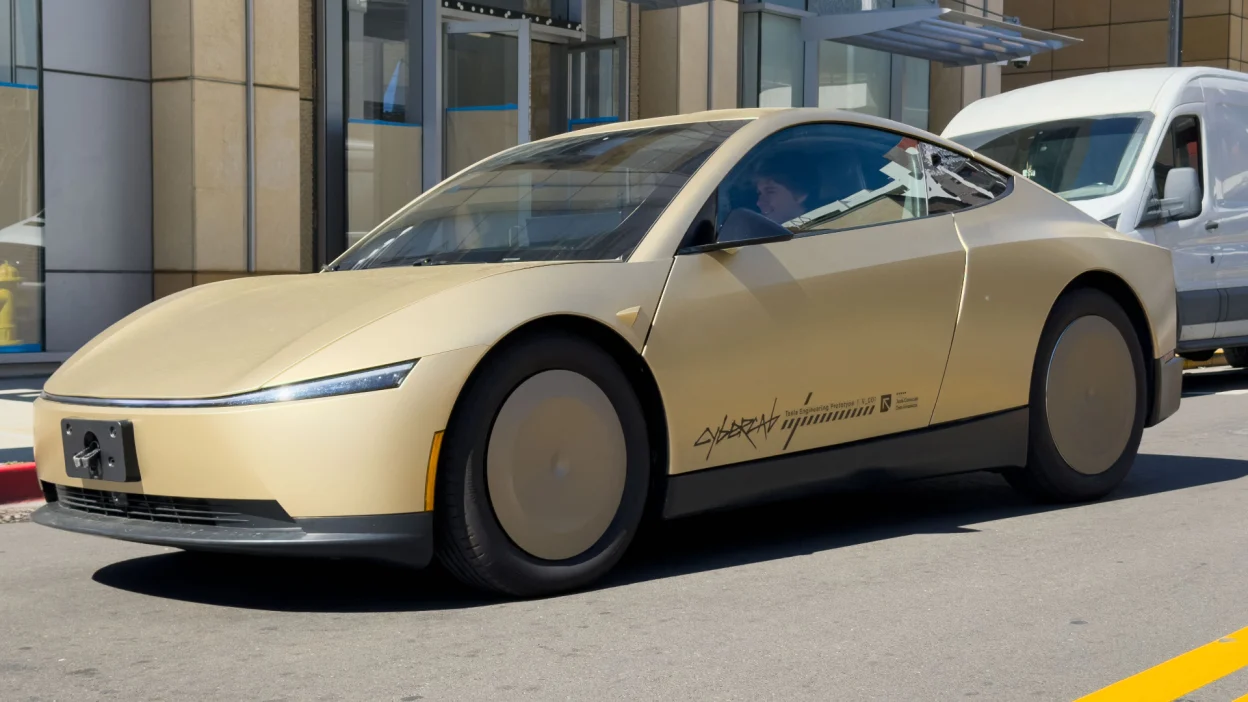
Tesla Cybercab specs reveal low weight, big range
Tesla CEO Elon Musk may currently be busy looking at his net worth blasting through one trillion dollars, thanks to the recent SpaceX IPO, but he's got other reasons to be jolly, too.
Electrek spotted the official EPA filing for Tesla's self-driving car, the Cybercab, and the numbers look pretty great.
According to Tesla's submission, the Cybercab will be powered by a single, 163kW (219HP) motor driving the front wheels, and a 47.6kWh lithium-ion battery.
While that battery capacity doesn't sound like much (for example, even the Rear-Wheel Drive Tesla Model 3 has a larger, 57.5kWh battery), the Cybercab is listed as having 418.2 miles of combined range, and 375.4 miles of highway range. Those sound better than they really are, mind you; these are unadjusted EPA test results, and we'll probably see lower official figures once the Cybercab hits the roads. In particular, EPA will likely apply a 0.7 correction factor to these numbers (as it does to all electric vehicles), which brings the combined range to 293 miles, which is still pretty great.
The impressive range is partially thanks to the Cybercab's low curb weight, which is officially 3,113 lbs (1,412kg). Again, compare that to a RWD Tesla Model 3, which weighs 3,552 lbs in its lightest-ever configuration.
It's easy to see why the Cybercab is so light: smaller battery pack, only two seats, no steering wheel, and no pedals. Electrek points out that Tesla probably could have pushed the weight even lower, but the company was probably happy with the efficiency numbers it got with this configuration. The company originally claimed the Cybercab would have close to 300 miles of range.
Tesla Cybercabs are now pretty much cleared to hit the roads from EPA's standpoint, but in order to send them to ferry actual passengers, Tesla still needs to pass some regulatory hurdles. The company currently has a limited robotaxi operation with Model Y cars ferrying passengers in Austin, Dallas, and Houston, Texas.
Topics Tesla

Stan is a Senior Editor at Mashable, where he has worked since 2007. He's got more battery-powered gadgets and band t-shirts than you. He writes about the next groundbreaking thing. Typically, this is a phone, a coin, or a car. His ultimate goal is to know something about everything.

Source link