Travel authority pulls public records used to create AI audio of deceased pilots

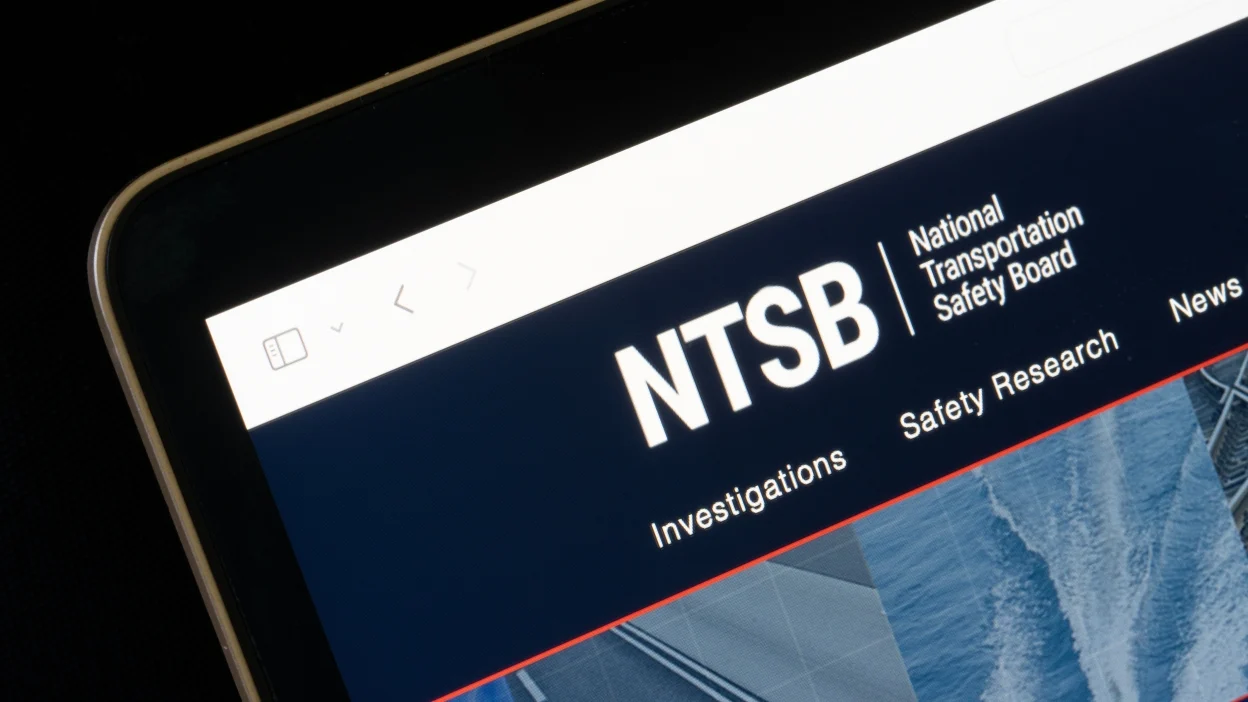
The National Transportation Safety Board (NTSB) is pausing the release of previously public information related to its investigations, after individuals used AI to recreate the last words of deceased pilots.
The independent agency was informed that an AI-generated rendering depicting cockpit audio of UPS flight 2976 was created and circulated, using only written documents submitted during the recent hearing, CNN reported. The Nov. 4 crash resulted in the deaths of three crew members and 12 civilians on the ground.
"We show our work and we’ve been doing this type of thing for years. Nobody was aware that you can recreate audio from a picture," an NTSB spokesperson told CNN. "NTSB is looking to make sure there’s nothing else in the docket that could compromise anybody’s privacy… now that we understand the possibility of a digital recreation."
You May Also Like
Under federal law, the NTSB does not release cockpit voice recordings to the public during investigations of deadly plane crashes. Instead, the agency will submit a transcript for the public record and — as was the case for flight 2976 — an audio spectrogram, which visually depicts sound frequencies, duration, and amplitude in a given clip.
Individuals were able to use the spectrogram, pulled from the public investigation docket, to digitally recreate the last 30 seconds of cockpit audio before the plane crashed, including the pilot's voices and background sounds. A second clip of recreated audio from an NTSB aircraft test was also circulated online.
This Tweet is currently unavailable. It might be loading or has been removed.
Citing privacy concerns, the agency released a public statement explaining their decision to pause access to investigation dockets, writing:
The NTSB is aware that advances in image recognition and computational methods have enabled individuals to reconstruct approximations of cockpit voice recorder audio from sound spectrum imagery released as part of NTSB investigations, including the ongoing investigation of the crash last year of UPS flight 2976 in Louisville, Kentucky.
The NTSB does not release cockpit audio recordings. Federal law prohibits such public release due to the highly sensitive nature of verbal communications inside the cockpit. The NTSB takes these privacy restrictions seriously.
Topics Artificial Intelligence

Chase joined Mashable's Social Good team in 2020, covering online stories about digital activism, climate justice, accessibility, and media representation. Her work also captures how these conversations manifest in politics, popular culture, and fandom. Sometimes she's very funny.

Source link