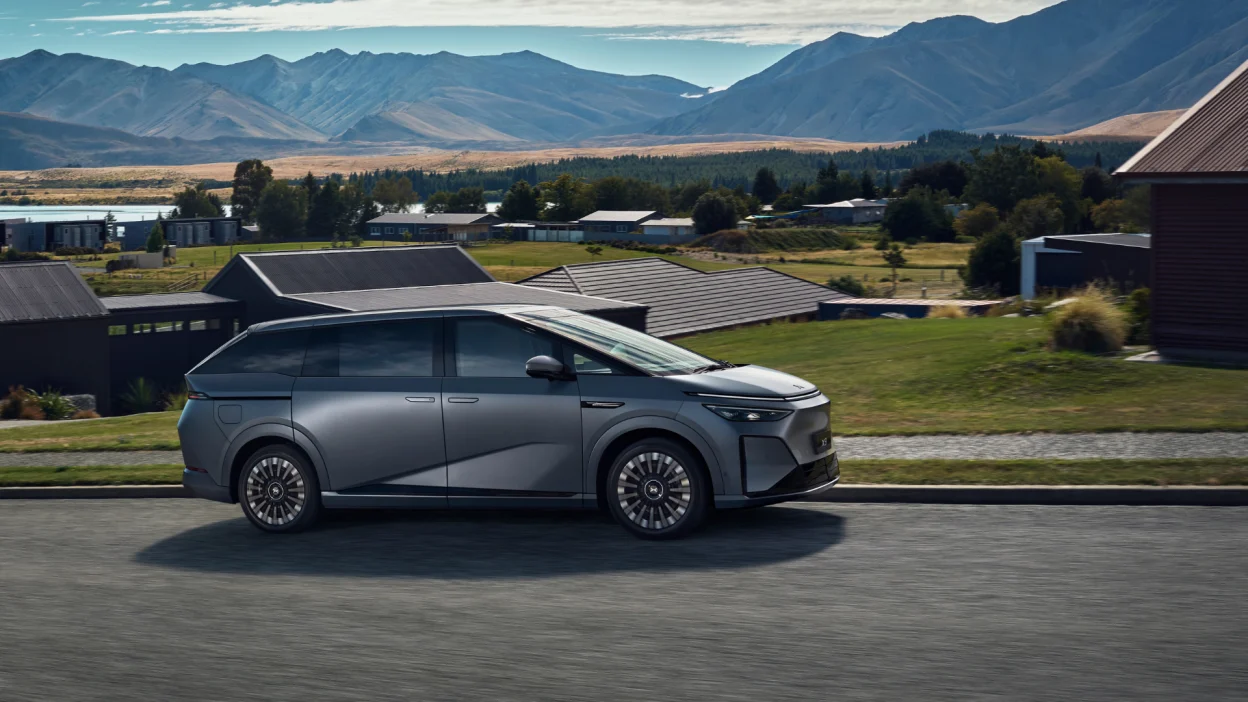
XPENG is doing R&D in the U.S., but isn't selling cars there. Here's why.

EV manufacturer XPENG will begin the global rollout of its VLA 2.0 autonomous driving system next year, the AI-powered model marking an important step in the company's efforts to develop driverless cars. Unfortunately, this tech won't be arriving in the U.S., with high tariffs continuing to keep the Chinese automakers out of the country.
Yet despite this, XPENG continues to maintain its Silicon Valley R&D centre, as well as develop its tech to account for U.S. drivers. Speaking to Mashable, XPENG's General Intelligence Center head Dr. Xianming Liu explained that, while it isn't in the U.S. market and doesn't test its cars in the country, having an R&D centre there remains invaluable for ensuring it's familiar with driving habits and conditions across the world.
"We need to make sure we and our R&D team understand the regulations, the traffic rules, but also the customer needs or customer habits. Once you have people locally drive [their cars] every day in Europe, in the U.S., you will know what people will like," said Liu. "How people are using [their cars] and how the regulations are different. I mean, the traffic rules are different, the traffic signs, everything is different."
XPENG has also established an R&D centre in Munich, Germany, Liu telling Mashable that each of these locations offer the company specific individual advantages. While Silicon Valley has a lot of talent and innovation, Germany excels at manufacturing and is home to several successful automotive companies. By conducting R&D in these areas, XPENG aims to both utilise and learn from these resources.
"Once you have an R&D centre in all the areas of the world, you can combine all the talent, all the thoughts together, and you can just make sure everyone is complementary to each other," said Liu.
EVs: the future of the automotive industry
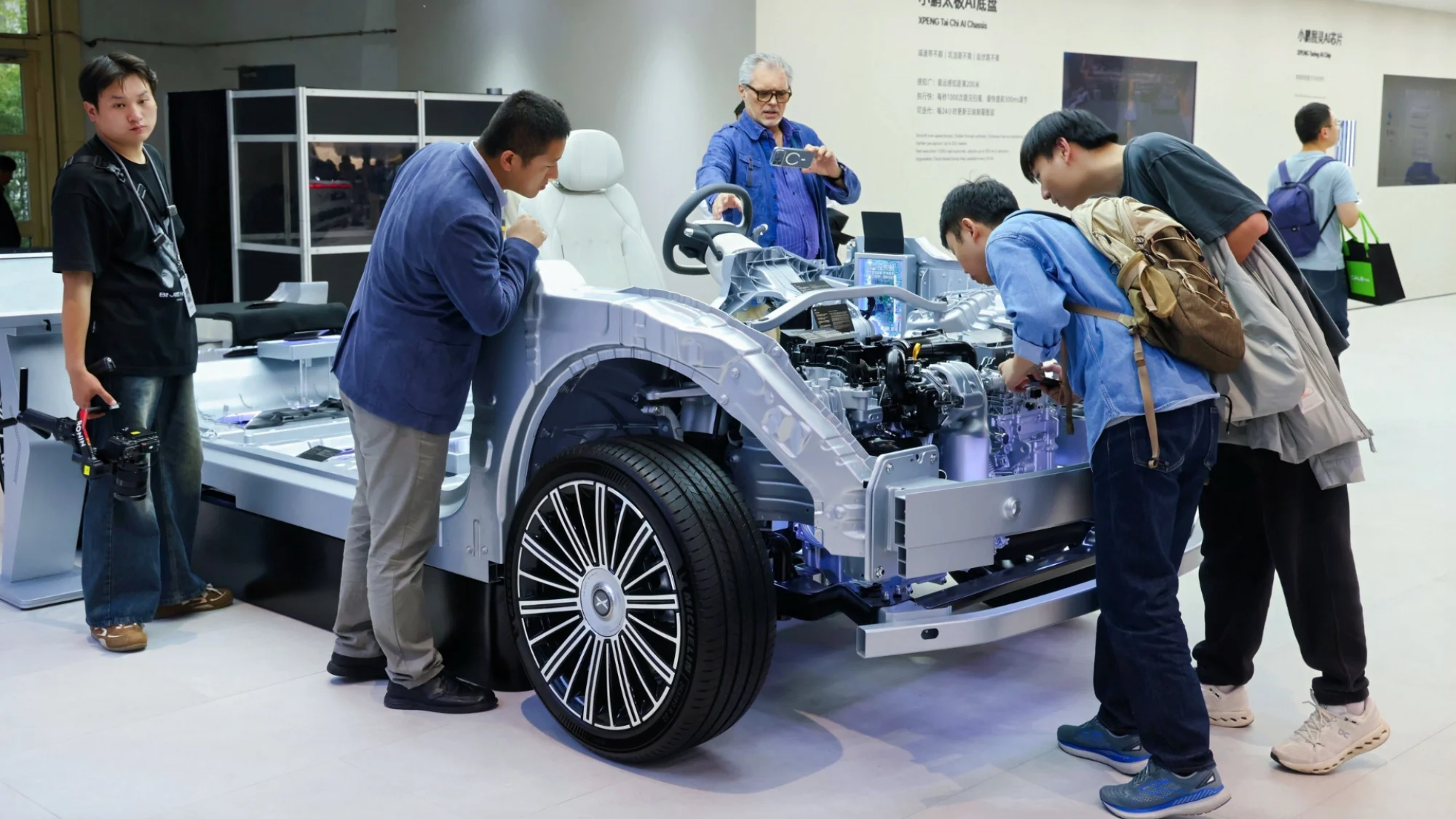
This includes tapping into China's resources as well. Like the San Francisco Bay Area, Liu stated that there's an abundance of talent in China's Greater Bay Area, including in Guangzhou where XPENG is headquartered. The widespread acceptance of EVs in China certainly helps autonomous car development in the region as well.
"We have people, we have freedom, we have flexibility to build the innovations," said Liu, speaking on the advantages of their Chinese R&D centre. "But also in China, the application of the AI system is pretty fast… People accept the concept of AI, accept the concept of [autonomous] driving, and also are willing to use it. So this gives us big room to keep iterating on the product."
Over half of all new cars sold in China are New Energy Vehicles (NEV), meaning that they are primarily or entirely powered by electricity. This April, that number rose above 60 percent. China isn't the only country embracing EVs either, with global electric car sales rising by over 25 percent in 2024. Almost all new cars sold in Norway during 2025 were EVs, while regions such as Latin America and Africa saw EV adoption double. In comparison, U.S. EV uptake has slowed significantly over the past two years, although they still account for approximately 10 percent of new car sales in the country.
"The new energy revolution is changing the world," said Liu. "It's not only happening in the U.S., not only in China, but also in other countries. South America, Central America, and even Europe, South Asia. So we will see the number keep increasing. And this can be very beneficial to the economy and also to the environment."
These aren't the only advantages to widespread EV adoption. Liu also explained that NEVs have better compatibility with autonomous driving systems than traditional internal combustion engine (ICE) cars.
"The New Energy Vehicle is more suitable for intelligent car systems or smart driving because the control chain is shorter," Liu said. "The signal is an electric signal instead of the power train using the gas."
As such, it is far simpler to develop a fully autonomous EV than an ICE vehicle. If fully self-driving cars are to not only become a reality, but tech that is commonplace, it will require people — and governments — to embrace electric cars first.
Creating a safe self-driving car
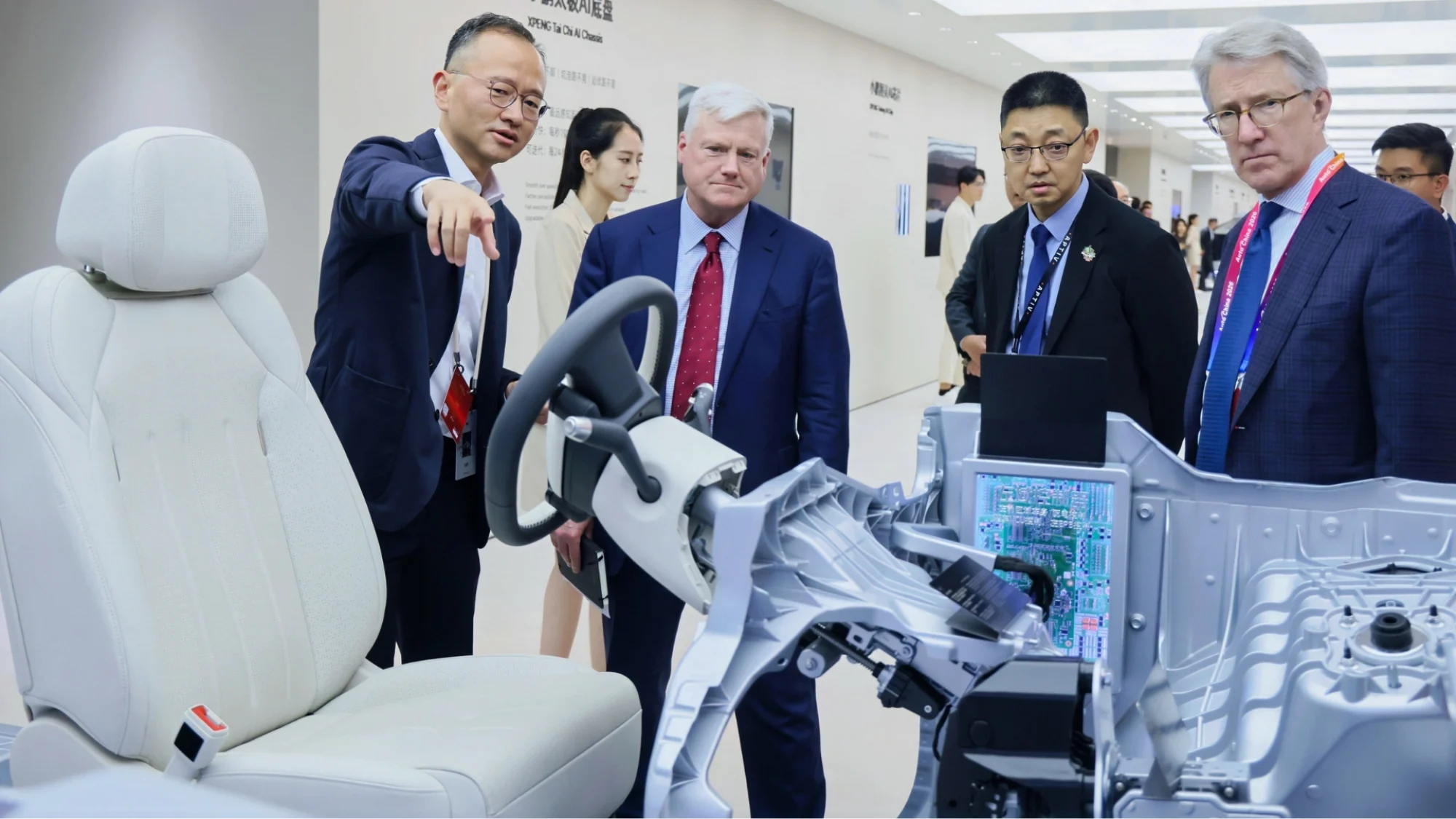
Liu previously worked at U.S. self-driving car company Cruise, a subsidiary of General Motors. When asked to compare development approaches in the U.S. and China's autonomous car industries, he said he found them to be the same: with safety as paramount.
"One underlying principle or philosophy that is not changing across different areas is safety," said Liu. "That's the first principle. No matter where you're working at, no matter U.S., Europe, or China, or even Southeast Asia, the problem is the same."
Secondary to this is to ensure the car feels safe as well, offering a smooth, comfortable experience that drivers can enjoy with peace of mind.
"We have four axes to evaluate our system. We call it CCES: comfort, compliance, efficiency, and safety," said Liu. "So you can make sure the car is safe enough, but a lot of hard breaks [are] just not [comfortable]."
For Liu, controlling the car's speed is key to ensuring both safety and comfort. To deliver this, XPENG trains its VLA 2.0 autonomous driving model to identify and adjust to real-time road conditions, as well as recognise road marks and signs, rather than rely on map data to determine the car's behaviour.
"We don't use any kind of rules or external information to say you have to drive this speed," said Liu. "Of course, people can control the wheel, control the scroll to set up the speed limit [of the car]. The model tries to learn what kind of typical speed people will drive in this kind of situation, because we need to make sure the car is safe enough and also [isn't] too slow."
Autonomous cars for the world (except the U.S.)
Though VLA 2.0 is expected to hit the global market in 2027, XPENG hasn't released any details about its international release schedule. At present, which country it will arrive in first will largely come down to whose regulations and standards XPENG can satisfy first.
"We're trying to work on different areas, different regions of the world, but we work with local governments to [ensure] we meet all the requirements," said Liu.
The U.S. may not be one of these regions, but being shut out of that market hasn't slowed XPENG's ambitions. The company is continuing to invest in R&D to ensure it can meet the different needs of new markets wherever they are.
"We are seeing the trend [of increasing EV adoption] is changing the entire industry. All the cars selling now in China, if you don't have the smart driving system, usually people will not consider it," said Liu. "That's why we keep pushing hard on the physical AI. Because we believe this is going to be the next big thing, and this is going to be invaluable in the next decade."
The auto industry is evolving at a rapid pace, with EV acceptance and adoption accelerating across the globe. XPENG is working to ensure they're prepared for this future, and will be ready if the U.S. decides to join in.
This interview has been lightly edited for grammar and clarity.
Disclosure: Mashable travelled to China as a guest of XPENG.
Topics Self-Driving Cars Cars


Source link