This Low-Mileage 2025 Tesla Model Y Lost A Lot Of Range Fast
After 18 months and just over 13,000 miles, Tesla’s own battery-health test showed a result its owner called unacceptable.

- Tesla’s own test showed 88% battery health after just 18 months and 13,162 miles.
- The Model Y displayed 302 miles at full charge, down 36 miles from when it was new.
- DC charging and parked energy use may be factors, but mileage alone doesn’t explain the loss.
Dissecting electric vehicle battery degradation tests is never boring or predictable. While there are patterns you start to see after poring over dozens of these pack health tests, there are occasional outliers that. Sometimes, high-mileage EVs have a lot more capacity left than you’d think, while others appear to exhibit accelerated degradation and range loss.
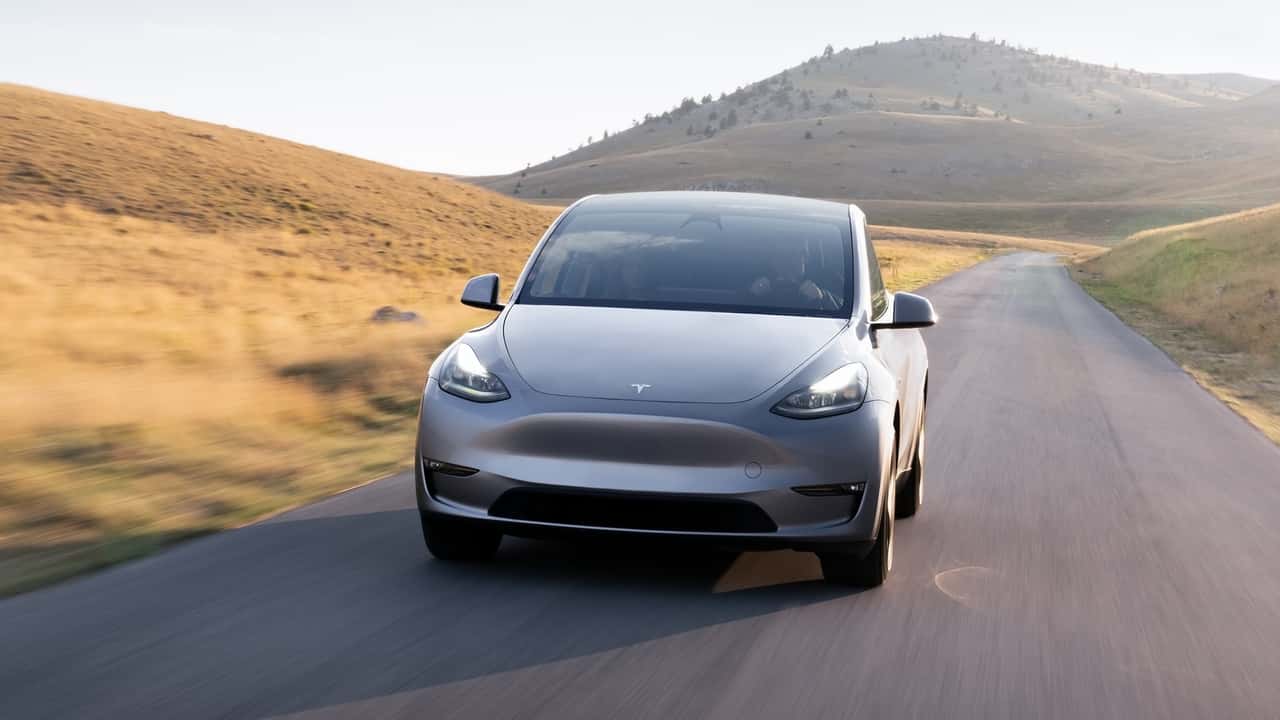
This new and low-mileage 2025 Tesla Model Y Long Range Rear-Wheel Drive falls into the second category. YouTuber Branden Flasch ran Tesla’s built-in battery health test on his own 18-month-old Model Y. The car had just 13,162 miles on it, so this is not some battered high-mileage EV with a hard life behind it.
The result seems pretty alarming for such a low-mileage privately owned Model Y: 88% battery health. Branden recalls performing the same test when the car had done around 6,000 miles, showing a state of health of 95%, and again at roughly 11,000 miles, when it had already dropped to 90%.

The results should be accurate since they were all performed through Tesla’s built-in battery health check procedure. It requires the car to be plugged into a Level 2 charger, and it discharges the battery to near empty, then charges it back to 100% overnight to really go through each cell.
Branden says the latest test took 12 hours to complete and, with a full battery, the car displayed a range of 302 miles after the test. That is 36 miles less than when it was new, and it makes you wonder what caused the battery to dip below 90% of its original capacity so quickly.
About 43% of charging was via a Level 2 AC home charger, with the remaining 57% from DC fast charging. Branden notes that while the latter entails a lot of Supercharging, which can deliver up to 250 kilowatts, his Tesla also saw a lot of 50 kW charging.

But this still doesn’t explain the capacity loss. Branden says his car sits outside a lot with Sentry Mode and Cabin Overheat Protection activated. Both of these systems use electricity, so this car has seen a greater-than-average drain on its battery while parked, especially with the latter, which uses the climate system and air conditioning to prevent the cabin temperature from exceeding around 105°F or 40°C.
So the capacity loss in this case could be explained by the constant drain on the battery while parked and the regular fast charging. But it still seems like a lot given the vehicle's age and mileage, and Branden says that if the degradation continues at this rate, the car will have just 82% remaining in another 18 months, when the lease ends.
That may or may not happen. Talking to Davide Giacobbe from EV battery testing company Voltest a few weeks ago, he told me that the brunt of EV battery degradation happens more quickly, then once the pack his around 90% health, the rate of degradation starts to slow down. He also said that while there is a correlation between battery health and mileage, the odometer often doesn’t tell the whole story and other factors often matter more.
RECOMMENDED FOR YOU

Tesla Model Y Battery Tested After 16,000 Miles Of Mostly Fast Charging
This Simple Trick Boosted My Plug-In Hybrid's Fuel Economy To 50 MPG
The Company That Builds The iPhone Just Unveiled A Tesla Model Y Competitor
Sodium Batteries And EVs That Power The Grid: Inside GM's Big Energy Push
These EVs Have The Highest Claimed Charging Power In 2026
Yes, EVs Really Are Cleaner Than Gas Cars. Here's By How Much
Tesla’s Model Y Price Bump Makes The Ioniq 5 And Mustang Mach-E Look Better Than Ever
Source link