Elon Musk reveals SpaceX’s AI satellite roadmap as investors await historic IPO debut
In the video posted on X, Musk outlined SpaceX's future plans, including the continued development of its Starship rocket programme and the Terafab facility that aims to manufacture computer chips in the US in partnership with Tesla.
4 Min Read


Elon Musk’s SpaceX is not just preparing for what could become one of Wall Street’s most anticipated IPOs. It is also laying out an ambitious vision for the future of AI infrastructure.
As investor excitement builds around the space giant’s historic market debut later this week, Musk has offered a deeper look at plans to build AI-powered data centres in space.
During a video discussion released by SpaceX, Musk explained that the company's goal extends beyond satellite communications and launch services. He said SpaceX aims to use its expertise in rockets, solar power and satellite technology to create computing infrastructure in orbit, powered by sunlight and cooled by the vacuum of space.
At the centre of the plan is the proposed AI1 satellite, the first version of a spacecraft designed to function as an orbital AI computing. According to SpaceX, the satellite will feature solar panels stretching about 70 metres and deliver around 150 kilowatts of peak power and 120 kilowatts of sustained computing capacity. The company plans to initially use Nvidia chips for the project.
“So, the three things you need are mass to orbit, a lot of solar power and radiators, of course, and a lot of chips. All right,” Musk said.
Musk argued that AI satellites could be easier to build than Starlink satellites because they would not require the complex communications antennas.
“An AI satellite is essentially a lot of solar cells, a radiator, and you still need some laser links, but you don’t have all of the super complex antennas that you have on a Starlink satellite. So, I mean, given the two, the easier one to design for is the AI satellite. Yeah. It's just a little bit bigger,” he said.
Why SpaceX wants computing in orbit
Musk believes computing capacity and power availability are emerging as key constraints in the AI sector. The company believes that moving computing infrastructure into orbit could help overcome some of the power and cooling constraints affecting terrestrial data centres. Musk also linked the concept to his broader vision of advancing civilisation's ability to harness energy on a larger scale.
“So, in order to start to make some progress on the Kardashev scale, we need to launch satellites to orbit Earth and capture solar power. And that avoids the need to build massive power plants on Earth and deal with cooling because cooling is actually much easier in space than it is on Earth. You can just radiate to the vacuum,” he added.
Starship's role in the project
A major part of the strategy depends on Starship, SpaceX's next-generation fully reusable rocket. The company said Starship's reusable architecture would enable the deployment of the vast quantities of solar panels, radiators and computer chips required for space-based AI computing.
“So, things it takes to scale are you need to have a large mass to orbit capability, which is what Starship will give us, that large mass. So, you know, you ultimately need to send millions of tonnes to orbit and beyond. And you need the power associated with that. So, if you want to put a hundred gigawatts or ultimately a terawatt into space from earth, you need, you will at some point need a terawatt of solar,” he said.
Massive manufacturing expansion
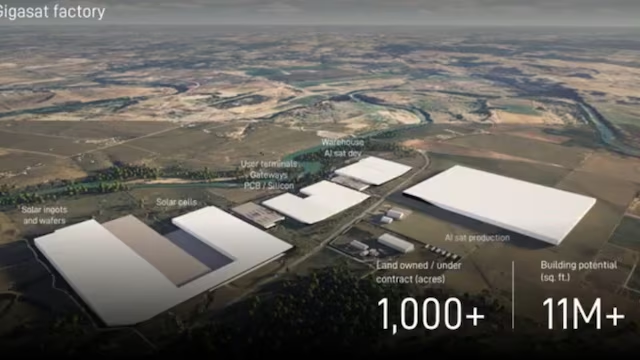
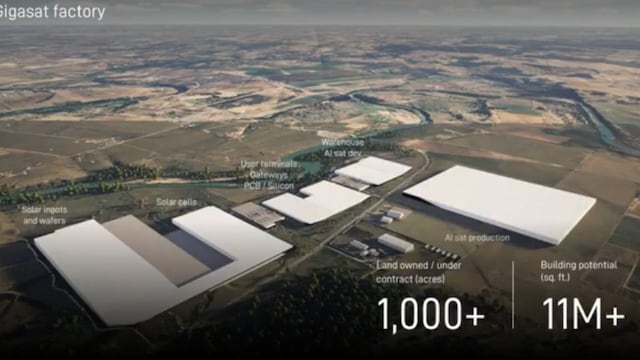
To support the initiative, SpaceX plans a major expansion of its manufacturing footprint in Texas. Musk unveiled plans for a facility known as ‘Gigasat’ in Bastrop, Texas, which will cover more than 11 million square feet and produce solar panels and components for AI satellites. He also discussed the proposed ‘Terafab’ project, a chip manufacturing complex expected to span around 100 million square feet.
“We expect that the TeraFab is going to be around 100 million square feet, which is 10 times the size of the Tesla Gigafactory Texas. I think over time, there's going to be a lot of technology evolution with the TeraFab. But fundamentally, it's about scale.”
Part of SpaceX's AI push
The orbital computing initiative forms part of Musk's broader strategy to strengthen SpaceX's position in the artificial intelligence sector. Rather than focusing solely on AI applications, the company is increasingly investing in the infrastructure required to power them, including chips, energy systems and data centres.
As investor excitement builds around the space giant’s historic market debut later this week, Musk has offered a deeper look at plans to build AI-powered data centres in space.
The billionaire entrepreneur’s roadmap includes reusable Starship rockets, AI computing satellites in orbit and large-scale chip manufacturing facilities. The plan positions SpaceX to expand beyond space exploration and become a major player in the AI infrastructure race.
During a video discussion released by SpaceX, Musk explained that the company's goal extends beyond satellite communications and launch services. He said SpaceX aims to use its expertise in rockets, solar power and satellite technology to create computing infrastructure in orbit, powered by sunlight and cooled by the vacuum of space.
AI data centres in space
Watch @ElonMusk provide a technical update on SpaceX’s capability to manufacture, launch, and operate AI satellites at scale → https://t.co/PSCyWrNsOg pic.twitter.com/vhtr46uax7
— SpaceX (@SpaceX) June 8, 2026
At the centre of the plan is the proposed AI1 satellite, the first version of a spacecraft designed to function as an orbital AI computing. According to SpaceX, the satellite will feature solar panels stretching about 70 metres and deliver around 150 kilowatts of peak power and 120 kilowatts of sustained computing capacity. The company plans to initially use Nvidia chips for the project.
“So, the three things you need are mass to orbit, a lot of solar power and radiators, of course, and a lot of chips. All right,” Musk said.
Musk argued that AI satellites could be easier to build than Starlink satellites because they would not require the complex communications antennas.
“An AI satellite is essentially a lot of solar cells, a radiator, and you still need some laser links, but you don’t have all of the super complex antennas that you have on a Starlink satellite. So, I mean, given the two, the easier one to design for is the AI satellite. Yeah. It's just a little bit bigger,” he said.
Why SpaceX wants computing in orbit
Musk believes computing capacity and power availability are emerging as key constraints in the AI sector. The company believes that moving computing infrastructure into orbit could help overcome some of the power and cooling constraints affecting terrestrial data centres. Musk also linked the concept to his broader vision of advancing civilisation's ability to harness energy on a larger scale.
“So, in order to start to make some progress on the Kardashev scale, we need to launch satellites to orbit Earth and capture solar power. And that avoids the need to build massive power plants on Earth and deal with cooling because cooling is actually much easier in space than it is on Earth. You can just radiate to the vacuum,” he added.
Starship's role in the project
A major part of the strategy depends on Starship, SpaceX's next-generation fully reusable rocket. The company said Starship's reusable architecture would enable the deployment of the vast quantities of solar panels, radiators and computer chips required for space-based AI computing.
“So, things it takes to scale are you need to have a large mass to orbit capability, which is what Starship will give us, that large mass. So, you know, you ultimately need to send millions of tonnes to orbit and beyond. And you need the power associated with that. So, if you want to put a hundred gigawatts or ultimately a terawatt into space from earth, you need, you will at some point need a terawatt of solar,” he said.
Massive manufacturing expansion
To support the initiative, SpaceX plans a major expansion of its manufacturing footprint in Texas. Musk unveiled plans for a facility known as ‘Gigasat’ in Bastrop, Texas, which will cover more than 11 million square feet and produce solar panels and components for AI satellites. He also discussed the proposed ‘Terafab’ project, a chip manufacturing complex expected to span around 100 million square feet.
“We expect that the TeraFab is going to be around 100 million square feet, which is 10 times the size of the Tesla Gigafactory Texas. I think over time, there's going to be a lot of technology evolution with the TeraFab. But fundamentally, it's about scale.”
Part of SpaceX's AI push
The orbital computing initiative forms part of Musk's broader strategy to strengthen SpaceX's position in the artificial intelligence sector. Rather than focusing solely on AI applications, the company is increasingly investing in the infrastructure required to power them, including chips, energy systems and data centres.
(Edited by : Sudarsanan Mani)
Source link
![Ottocast turns your car screen into a match-day hub for Summer Soccer Celebration [15% off]](https://startupnews-media-2026.s3.us-east-1.amazonaws.com/startupnews-in/uploads/2026/06/rss-mqgmgegk-ql5u4s-0.webp?X-Amz-Algorithm=AWS4-HMAC-SHA256&X-Amz-Content-Sha256=UNSIGNED-PAYLOAD&X-Amz-Credential=AKIAZQ3DRHCSCL44VIMT%2F20260616%2Fus-east-1%2Fs3%2Faws4_request&X-Amz-Date=20260616T125540Z&X-Amz-Expires=604800&X-Amz-Signature=737b7002bc4312c90f38ff01f4bf51046b4f0d4f7c3b75bbb7b5e03615accc8a&X-Amz-SignedHeaders=host&x-amz-checksum-mode=ENABLED&x-id=GetObject)