
How India’s online shopping market is splitting into two distinct segments, BofA explains
Sachin Salgaonkar, Senior Analyst-APAC Telecom, e-commerce at BofA Global Research expects competition in quick commerce to ease over the next few quarters, sees telecom tariffs rising further by 2027, and believes AI-led vernacular and voice commerce could unlock hundreds of millions of new digital users in India.


India’s digital consumption story is increasingly becoming a “barbell market,” where premium consumers are driving rapid growth in quick commerce while value-conscious shoppers are boosting low-cost e-commerce platforms, according to Sachin Salgaonkar, Senior Analyst-APAC Telecom, e-commerce at BofA Global Research.
Salgaonkar said the middle segment of the market is growing more slowly, creating a sharp divide in how internet companies are capturing demand across India.
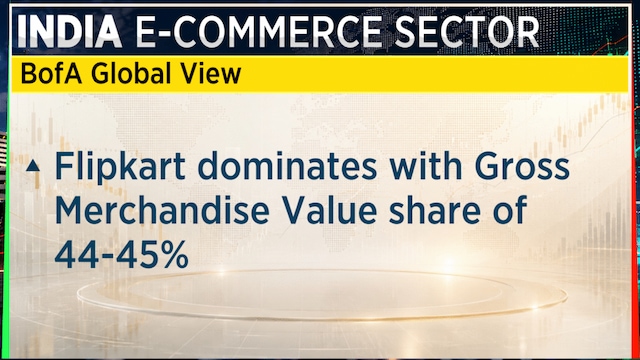
According to him, quick commerce platforms are seeing very strong growth among affluent users who are willing to pay for faster delivery, while value-commerce platforms are expanding rapidly among price-sensitive shoppers.
“At the high end of India, you have quick commerce... at the low end of India, you have a completely different model called value commerce,” he said.
Also Watch | Banks, pharma, IT: Where this CIO is placing his bets right now
He added that competition in quick commerce remains intense because companies are aggressively expanding dark stores and offering discounts to attract users in new areas. However, he expects this pressure to reduce over the next six to nine months as companies become more disciplined with capital spending.
“None of these platforms has unlimited access to capital,” Salgaonkar said, adding that first movers with stronger affluent user bases are likely to perform better over the medium term.
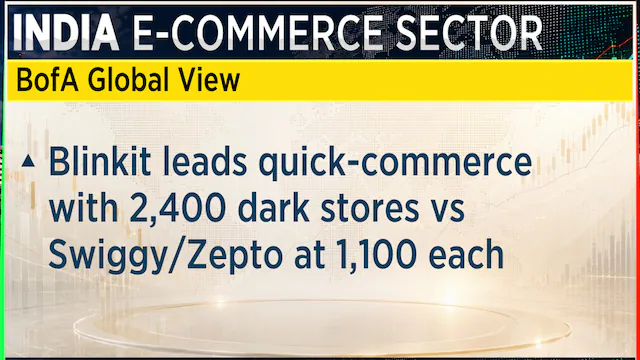
Despite the rapid growth in online shopping, Salgaonkar believes India’s e-commerce sector is still far from its biggest growth phase. Online retail penetration in India remains only around 10-12%, much lower than markets like China and Indonesia during their high-growth periods.
He expects a major inflexion point once India’s per capita income rises further, which could also improve profitability for e-commerce companies through stronger advertising revenues.
Also Watch | Swiggy, Eternal taking different paths in quick commerce battle, say experts
On telecom, Salgaonkar said the sector largely remains a “two-and-a-half player market,” with two dominant operators and one weaker player continuing to lose market share gradually. He expects telecom tariffs to continue rising over time, with another headline tariff hike possible around early 2027.
He also highlighted artificial intelligence (AI) as a major long-term opportunity for India’s digital economy, especially through regional-language and voice-based commerce.
Watch the full conversation here
“There is a huge vernacular or regional language population which is out there,” he said. “AI will play a big role” in helping millions of new users come online through voice-led shopping and digital services.
According to Salgaonkar, India’s large user base is making it an important market for global AI models, with the country potentially becoming a testing ground for mass adoption of AI-driven consumer applications.
Catch all the latest updates from the stock market here
Salgaonkar said the middle segment of the market is growing more slowly, creating a sharp divide in how internet companies are capturing demand across India.
“What we mean by that is, unlike other markets, what India has evolved differently is that for every set of consumers, you have a particular business platform or a model servicing them,” he said.
According to him, quick commerce platforms are seeing very strong growth among affluent users who are willing to pay for faster delivery, while value-commerce platforms are expanding rapidly among price-sensitive shoppers.
“At the high end of India, you have quick commerce... at the low end of India, you have a completely different model called value commerce,” he said.
Also Watch | Banks, pharma, IT: Where this CIO is placing his bets right now
He added that competition in quick commerce remains intense because companies are aggressively expanding dark stores and offering discounts to attract users in new areas. However, he expects this pressure to reduce over the next six to nine months as companies become more disciplined with capital spending.
“None of these platforms has unlimited access to capital,” Salgaonkar said, adding that first movers with stronger affluent user bases are likely to perform better over the medium term.
Despite the rapid growth in online shopping, Salgaonkar believes India’s e-commerce sector is still far from its biggest growth phase. Online retail penetration in India remains only around 10-12%, much lower than markets like China and Indonesia during their high-growth periods.
He expects a major inflexion point once India’s per capita income rises further, which could also improve profitability for e-commerce companies through stronger advertising revenues.
Also Watch | Swiggy, Eternal taking different paths in quick commerce battle, say experts
On telecom, Salgaonkar said the sector largely remains a “two-and-a-half player market,” with two dominant operators and one weaker player continuing to lose market share gradually. He expects telecom tariffs to continue rising over time, with another headline tariff hike possible around early 2027.
He also highlighted artificial intelligence (AI) as a major long-term opportunity for India’s digital economy, especially through regional-language and voice-based commerce.
Watch the full conversation here
“There is a huge vernacular or regional language population which is out there,” he said. “AI will play a big role” in helping millions of new users come online through voice-led shopping and digital services.
According to Salgaonkar, India’s large user base is making it an important market for global AI models, with the country potentially becoming a testing ground for mass adoption of AI-driven consumer applications.
Catch all the latest updates from the stock market here
Source link





![Deals: AirPods Pro 3, Apple Watch Ultra 3 $99 off, base M5 MacBook Pro $200 off, more [Updated]](https://startupnews-media-2026.s3.us-east-1.amazonaws.com/startupnews-in/uploads/2026/06/rss-mqglbk8j-9u7w0w-0.jpg?X-Amz-Algorithm=AWS4-HMAC-SHA256&X-Amz-Content-Sha256=UNSIGNED-PAYLOAD&X-Amz-Credential=AKIAZQ3DRHCSCL44VIMT%2F20260616%2Fus-east-1%2Fs3%2Faws4_request&X-Amz-Date=20260616T122117Z&X-Amz-Expires=604800&X-Amz-Signature=ccb60282529db9868347a0208ca696f07772705c8b40f0ac3399e8feac8f06ac&X-Amz-SignedHeaders=host&x-amz-checksum-mode=ENABLED&x-id=GetObject)